At Ultralight, we believe our gear is only as good as the underwater photographer, cinematographer, or camera assistant it supports, and no one showcases that better than our Brand Ambassadors. To give you a closer look at their images, stories, and the passion behind their work, we asked each Ambassador a series of thoughtful questions about their backgrounds, favorite rigs, and what inspires their photography and filmmaking. It’s our way of sharing not just how Ultralight gear is used, but also the creativity and spirit of the people who bring it to life.
Could you please share a little about yourself and the journey that brought you to where you are today?
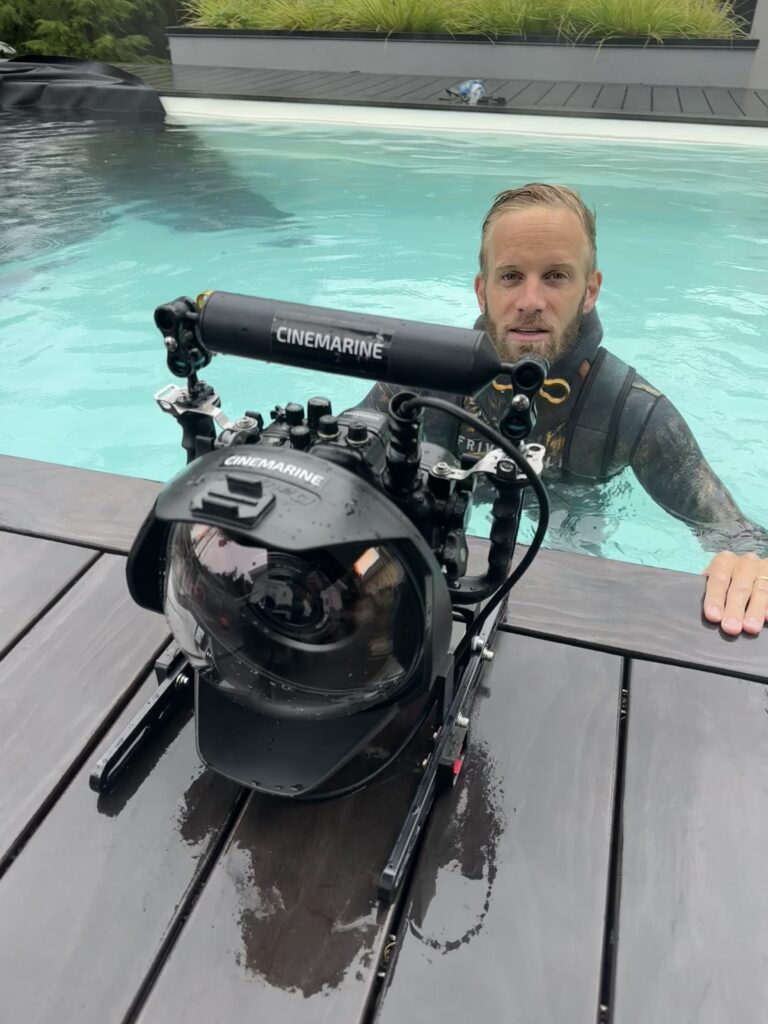
Sure, my name is Kjetil Astrup, and I grew up in the south of Norway, freediving after crabs in rich kelp forests in the archipelago. My family always travelled a lot, and I’m doing the same with my kids now. Seeing the world is a proper part of a proper upbringing in world history, culture, and food, which, I think, leads to healthy reflection and respect. As soon as I turned old enough to buy my own airline tickets, I went to the Red Sea to get my diving license. I saw a camerawoman onboard our boat with an Ikelite housing. At the same
time, I was about to start my cinematography studies, and I thought that the water element
mixed into my coming career would be something I needed to delve more deeply into. The year
after, I had her job, and I moved to Egypt, where I was filming in the water for half a year. My
voyage took me further on to South-East Asia, where I was based in Thailand for quite some while,
and then backpacking and filming through Borneo, West Timor, Indonesia, Malaysia, Vietnam,
Singapore, Laos, Cambodia, continuing on to my last years of film studies on the west coast of Australia,
in Perth. When I graduated, I moved back to Norway, as my vision has always been to contribute a
professional element of water-related filming to the film industry in Scandinavia.
What things in life have helped you get where you are today?
Getting where I am today is thanks to having a foot in both the diving and the film industry. I’ve
been running a few diving centres, arranged dozens of diving expeditions, hung around the
DEMA, IBC, and BOOT expos and dived on almost every continent. Over a couple of thousand
dives later broadens your horizons and gives you a lot of friends around. For example, now I’m
using my vast connection network of divers whenever we need a specific diving location.
Also, my parents always cheered me on chasing my passion dreams, and after I met my Swiss
wife (working diving on Gili Island in Indonesia), she has been my biggest supporter in doing what I
love, underwater cinematography.
What level diver are you, and where do you like to dive?
Today I’m a PADI Master Scuba Diving Trainer with speciality in tens of courses; ice, self-reliant,
first aid, photo, film, amongst others. I’m also a commercial diver, as some countries demand
different types of regulations when filming/working in water. I love tropical diving, but also cold
water diving. As long as the waters are nutrient, vivid and colourful, I enjoy it. But I’m also fond of going
under the ice for the special light and unique environment. And of course, some of our strangest
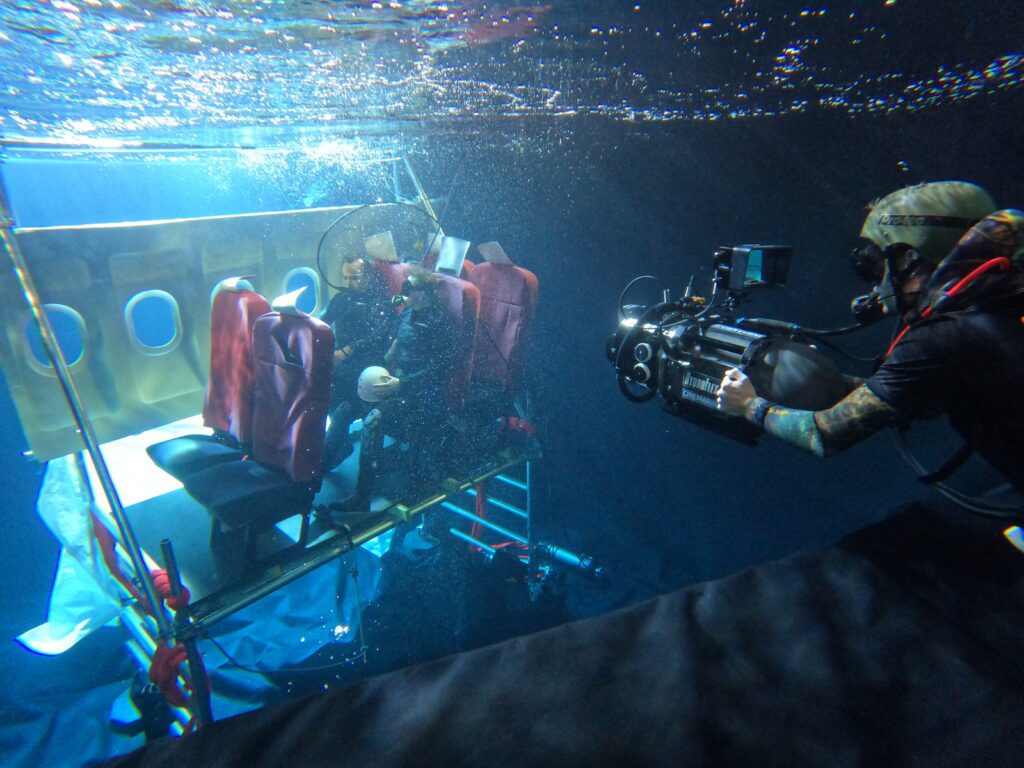
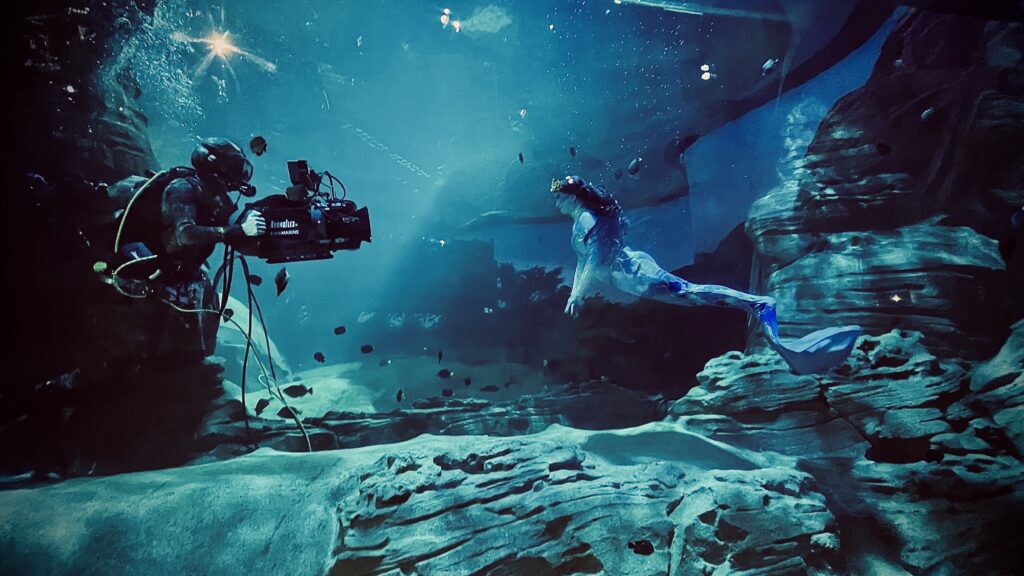
but most fun work is filming in tanks for movies.
Can you share a memorable moment or experience from your underwater adventures?
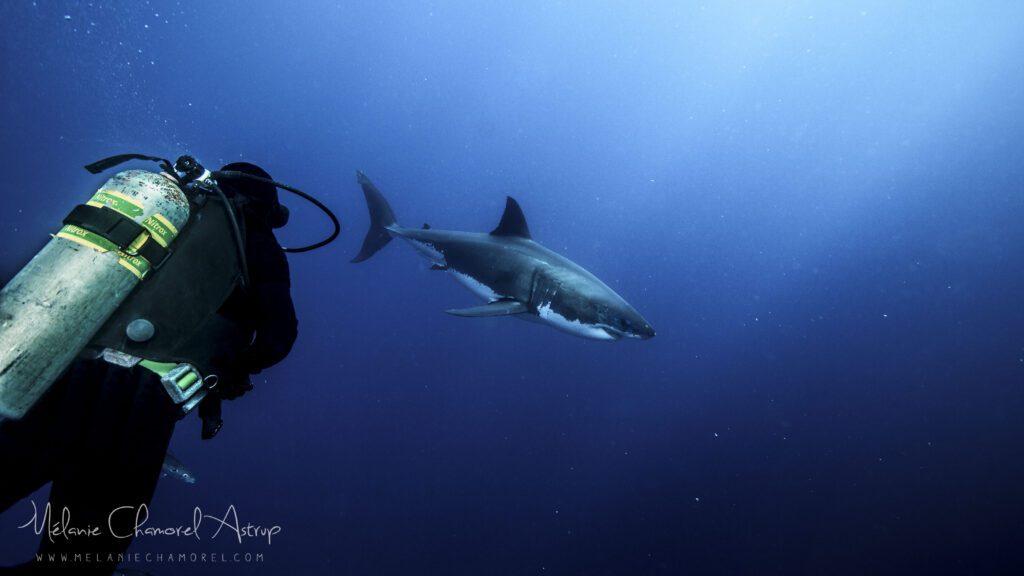
One of my best moments from a diving expedition was on our honeymoon. We went diving and filming
great white sharks at Isla Guadalupe, outside Mexico, more than ten years ago. No cage and with
the supervision of Dr. Mauricio Hoyos. Extremely grateful for the seriousness of the expedition,
taking care of the animals, respect for the shark king of the ocean, and also our humbleness in getting
the shark in front of our lens to show and educate others. At one point throughout the dive, we had
three 5-meter great whites around us. The whole situation manifested in me that this was it, I’m
supposed to be behind a camera in water. Sharks or actors, this is what I’m going to do the rest
of my life. It didn’t help that my night reading was Blue Water, White Death from Ron & Valerie
Taylor's shark adventures.
What are your favorite locations or dive sites for underwater photography, and why?
I can’t really say if I have a favourite dive site for underwater cinematography. Every brief is always
different. As I’m also the coordinator of every water unit expedition my team and I go on, I
find interest in the process of unlocking the solutions for every project. Last October, we needed
to film beauty shots of tuna for a TV series where we ended up outside Comino Island in Malta. In
the middle of the pandemic, we needed to find a lake in Europe with crystal clear water, solid ice,
ok logistics, and the possibility to travel in a crew from the Netherlands and Norway. We did all the R&D as it was a highly specified underwater shoot, and that’s, of course, our specialization. We ended up in
the Tyrol mountains north of Italy, where we filmed scenes over and under the water for Netflix.
Non-work related, if I could choose right now, I think my top 5 want-to-dive sites would be
mantas and dolphins at Revillagigedo Island, cownose rays at Baja California, whale shark diving
in Oman, I haven’t been to Raja Ampat, and on that same trip, I would go to Maluku to find and film
the mysterious leatherback turtle! Also, I have a few secret spots in Thailand I need to explore soon.
What camera setup do you currently use for underwater photography?
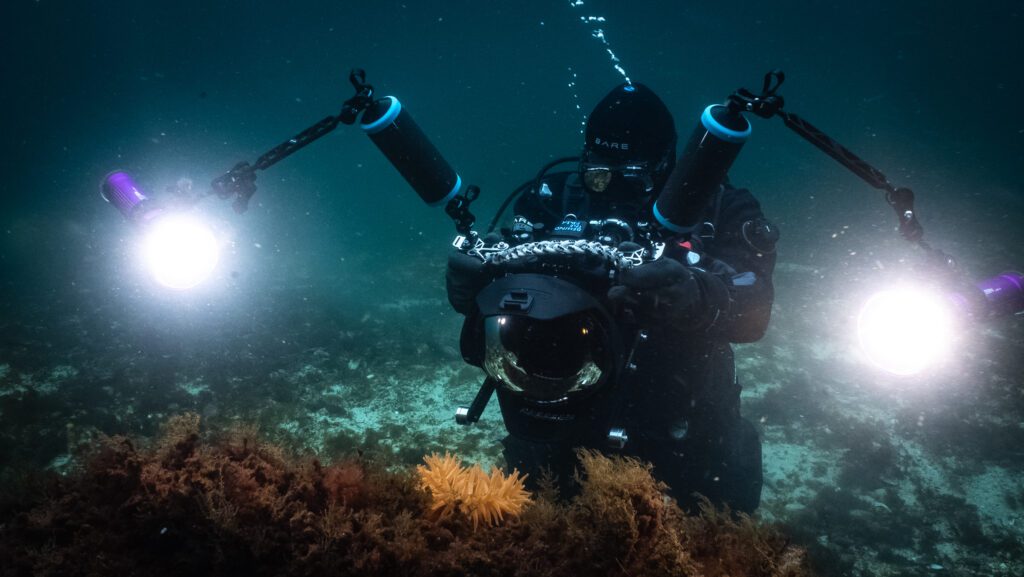
As every dive brief is different, the same goes with the tech. My in-house rig is the low-light king, Sony
A7S3. I go a long way with that one when we film orcas and humpbacks up in the Arctic with very
little sunlight. I tend to film a lot between 16 and 40mm, so my lens kit would be somewhere
around that. I always pack a couple of wide-angle lenses in addition, working as backups but also for establishing and general wide-angle shots. I have the wet lenses Sea&Sea SWL-Fisheye 12mm
f/3.5 and Nikon UW Nikonos 15mm f/2. Super sharp old lenses that still work great. In addition, I
film a lot with the Sony FE 16-35mm f/2.8 GM zoom lens in a Nauticam housing, what the WACP-2
dome. I can get some really close shots, but also the split shots on the surface with this amazing,
thick lens glass. The fun lens is the 24mm macro snorkel from Laowa, which I have an underwater
adapter for, so I can submerge the whole rig and do super macro with a wide background.
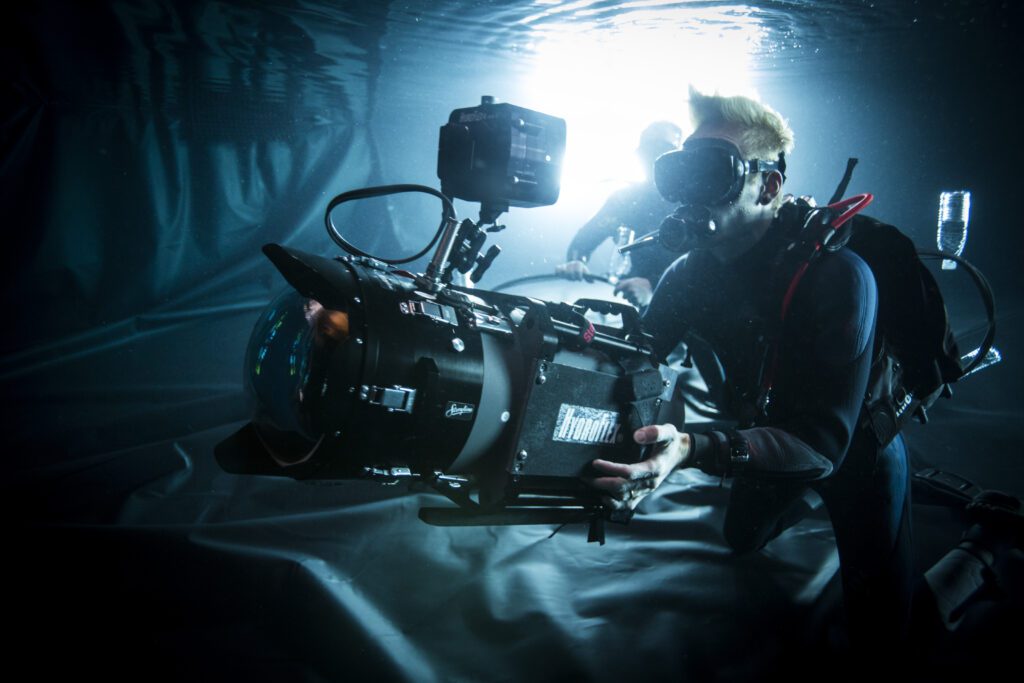
When filming for movie projects, we tend to use bigger cine cameras to align the workflow from
A-cam. My company, Cinemarine, is representing Hydroflex housings in Northern Europe. That
housing has no limitations, fits all cameras and lenses. Analog, digital, primes, and zooms. Even
the super-slow-motion 4K camera Phantom. It’s all packed to travel, as we fly worldwide with all
the gear we have.
How do you decide what gear to use?
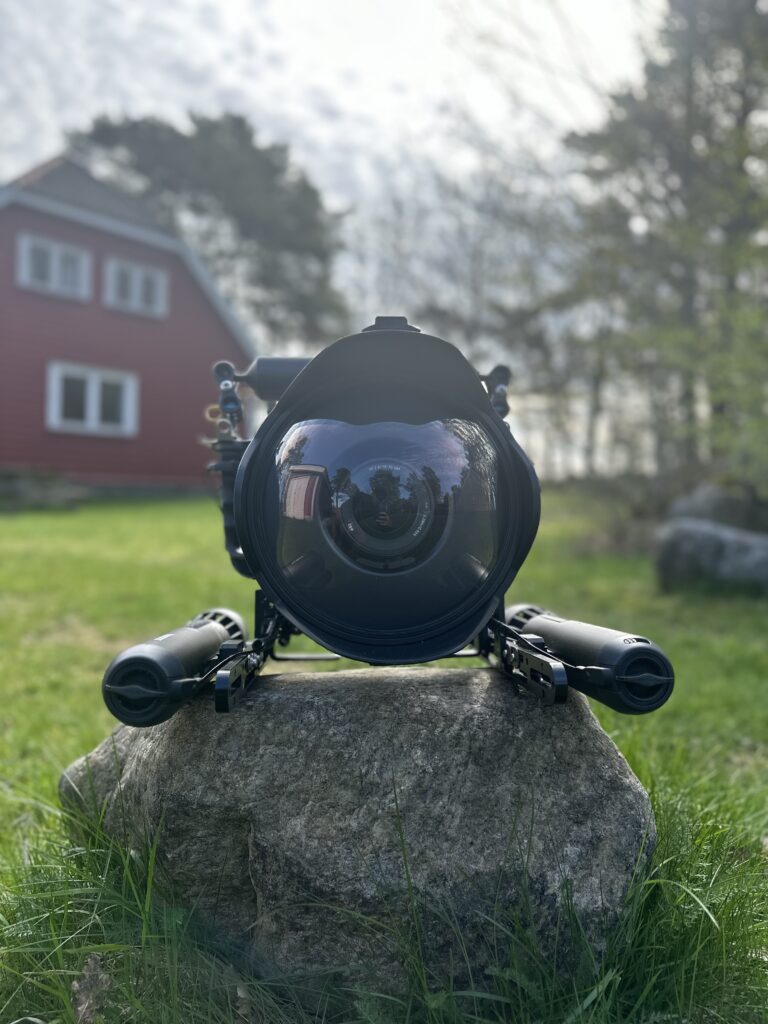
My gear preferences are always project-based. I’ve used Gates, OceanEye, and IMAX
(Hydroflex), Nauticam, Amphibico, Ikelite, Hugyfot, custom rigs, etc., all there is. Each tech is there
for its own reason, whether shooting macro wildlife or actors in an indoor pool. I love doing both. I find it as much fun filming eyes on a scallop as well as action scenes with actors in a pool with added
wind, current, and waves.
Do you prefer artificial or natural light, and why?
Shooting in nature with a wide-angle lens, I rely heavily on natural light. Only sun if you want the God
rays, or cloudy if needing a nice overall diffused light from above. I always bring with me a couple
of Keldan lights and a small LED panel that can fit in my BCD pocket if I need more focus light or
get rid of raccoon eyes inside a mask.
Do you have any favorite techniques that you can share?
Planning a film dive is always very much about checking the weather forecasts and getting proper local intel on visibility. I get local divers to give us hands-on feedback and to provide photos/video, as vertical and horizontal visibility can differ. You have to add in thermocline, halocline, plankton floating around, river outlets, current, and water color. Standing on a jetty, looking down into the water, only gives a brief glimpse of what's happening underwater. I have accounts on Windy, YR, Vesselfinder, and other channels to check for wind direction, sun direction, weather movement, and boat traffic. Offshore wind, no rain for a couple of days, and a cloudless sunny day, outside of the plankton season is always a good bet for excellent visibility and stable conditions.
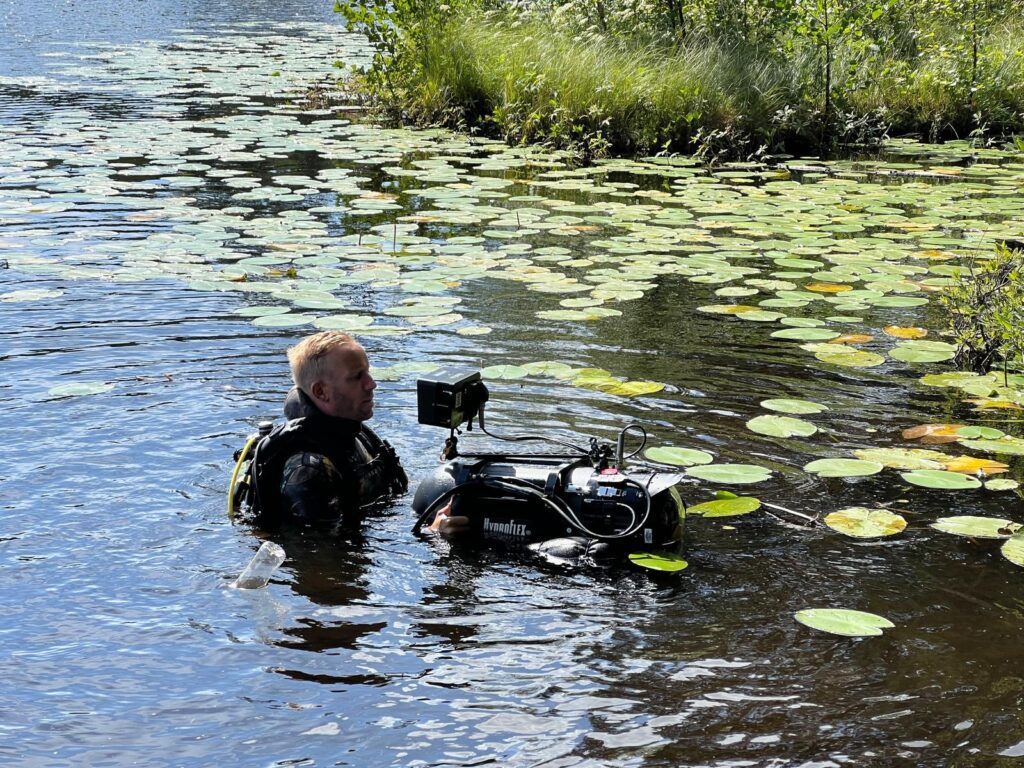
Another key factor for good visibility is, of course, the ever-important issue of buoyancy. Therefore, I’m a frogkicker, in any given situation, been practicing my helicopter and reverse turns a lot. I was really inspired while filming in caverns for a feature film in Mexico; it saved me in many small positions, both in exterior waters and in pools with film set constructions. The advanced dry suit experience I get in cold water is also beneficial to my overall buoyancy skills, as it's a technique that involves using your whole body as a float and trim device, not just the BCD.
What’s your favorite piece of gear from Ultralight and why?
My favourite gear from ULCS must be the cutout clamps with ball heads, which I use on almost
every project we have. Either for holding a monitor, a sunshade, a light, or props. Actually, I use all
my ULCS parts annually; there are so many different builds, which is the best part about it. The cardellini
clamp kit you should always pack in your bag.
Can you share a project where ULCS gear significantly impacted your work?
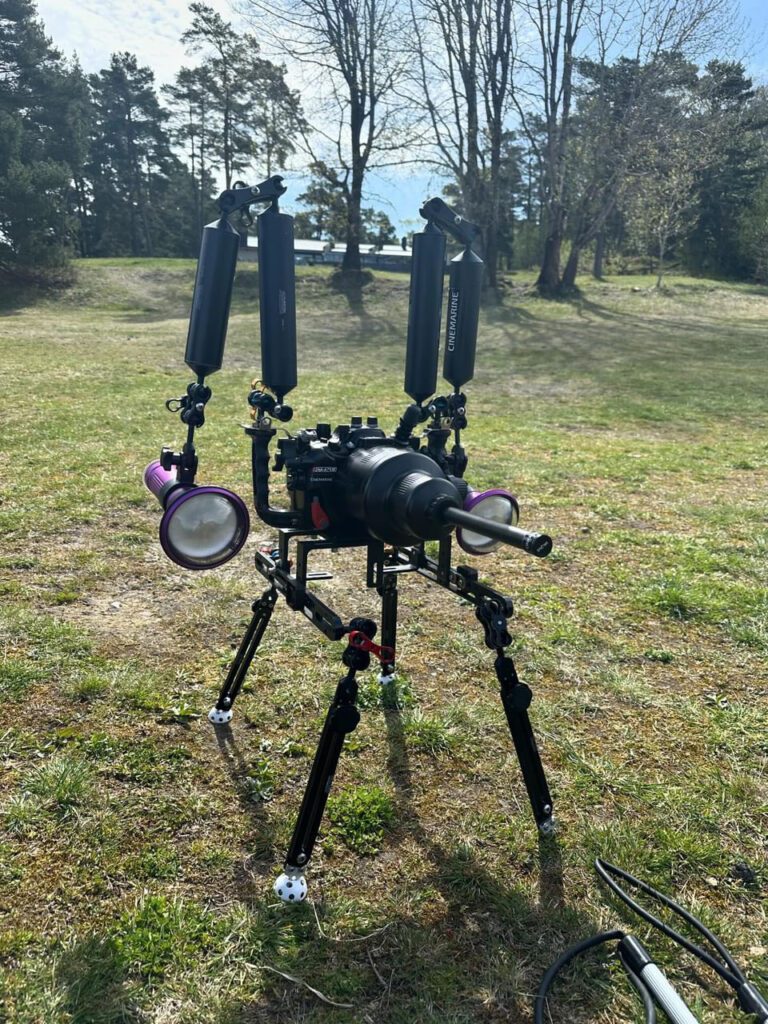
I’m most proud of having contributed to the underwater camera sled tray kit. For years, I looked for a slick leg setup for smaller cameras like my Sony A7SIII. I needed several attachment points around, both for weight calibration and to add other ballheads and buoyancy concepts. And most importantly, getting away from the strain on the dome when putting the camera flat down and the overall anxiety of handing the rig to somebody who doesn’t know how to put it down safely. Ken did an amazing job by landing on a product made in the spirit of ULCS.
What is your creative process, and what inspires your underwater photography?
My creative process for getting inspired is quite broad. I like scrolling through visuals others have done,
especially older adventurous pictures from before we had all this tech and filmed ‘everything’. I
also head to local art galleries, aquariums, museums, and visit maritime workers. Travelling is a
key factor here, indulging in abnormal situations, Anthony Bourdain style. We’re in a period of time
where I think we’re over-informed on most things in the world, so it's still important to chase the
small stories, the mysteries, the other angles that will form your way. Many times, the best
learning is to go diving with a camera and do the practical tests to shape the ideas even more.
That way, you can tune your compositions and the predicament of marine life movements. That takes
time and many dives with different marine species. There are also different ways of filming for
commercials, docu-style, VFX, or motion picture. You have to plan and discuss factors like tempo,
transitions, and which feelings to convey, which music is added in post-production, and so on.
We did the underwater scenes for the Oscar-nominated documentary The Cave, and to really
sympathise the correct tempo, mood, and soundscape, we played the music score on underwater
speakers while I was filming at a depth of 16 meters in the water outside Kas, Turkey.
At my home turf in Norway, we do have a very unique orca and whale season in the wintertime. The
water is clear of plankton, with super visibility, and all the mammals gather into one fjord for a feast of
herring. We can easily dive with them as they are only interested in the fish. Last year, I filmed the
Sky Nature series Whale with Steve Backshall, and I had around 30 humpbacks passing beside
me and my camera. After that, the orcas gathered around us, and we had one teenager orca
circling Steve and trying to offer him a herring on several occasions. A magical nature experience.
I take great confidence and joy in filming big mammals. I have hundreds of shark dives. In recent
years, I’ve also delved into the macro world to show non-divers what the beautiful, colourful
underwater world could look like, especially with a cinematic approach to it. Shallow depth of
field, artistic angles, good colour grading, and it should take your mind to dream a bit about the
wonders of nature. As I’m also filming a lot of fiction and motion pictures, I really enjoy finding
concepts for actors in the water, and consulting with directors and scriptwriters on how to
perform it.
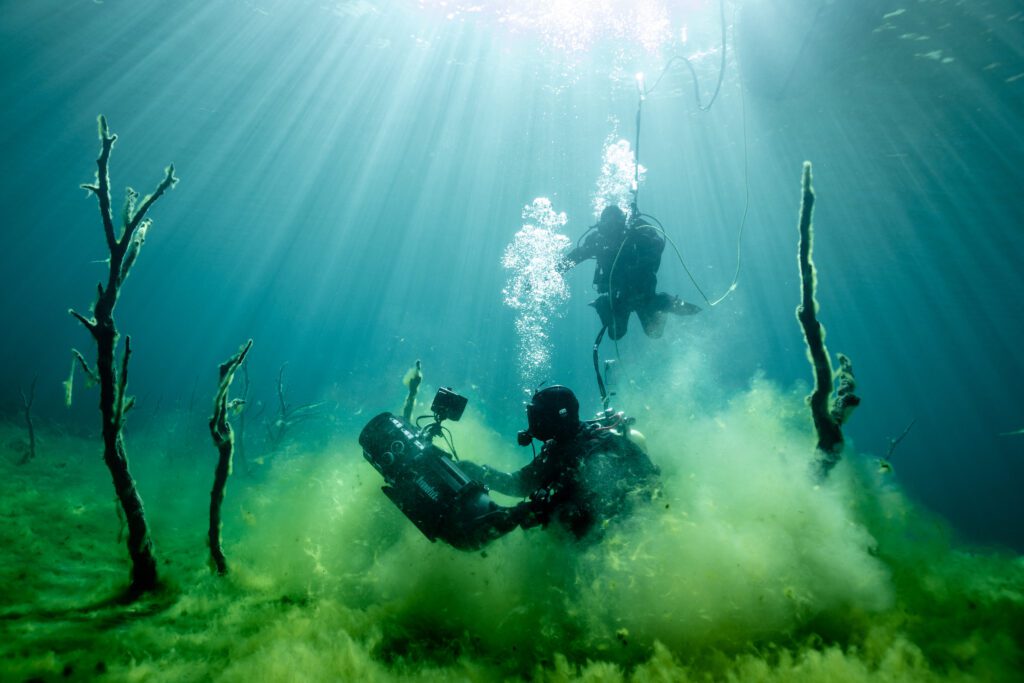
Many years ago, we did a short film in a special lake in Norway, which we call the
Atlantis of Norway. It's a sunken old village and forest, preserved in glacial water. The trees and
paths are intact. For this film, we cast a cold-water free diver to walk around in the forest at
4 °C / 39°F water without a wetsuit, only a costume. It became some of the most striking visuals I’ve
done as it's so out-of-the-ordinary, and it's real, all made in-camera, and it took a lot of planning,
trials, and effort.
Have you ever encountered any unexpected or dangerous situations while underwater?
As diving is also my job, safety is on high alert. Even though situations occur, and usually it's because of nature and animals. I’ve had a poisonous banded sea snake around my leg in Thailand, a moray eel attacking my camera in the Red Sea, and a dog shark biting a hole through my dry gloves in Norway. Everything went well by maintaining calm in the situation, lowering your heartbeat and breathing, and keeping your buoyancy level intact. The more dangerous dives I’ve had were in extreme currents.
At one point, my diving crew and I were in Thailand, where third-party hired-in diving contractors for the Thai navy were searching and retrieving a body. The area was a small island between two large islands, offering a strong current and a downward current. We performed snagline and circular search patterns, and the current was so strong that we had to use one of our hands to hold the half-mask onto our face, and the palm of our hand to keep the regulator in our mouth. It was exhausting, clinging to rocks underwater. In the end, without finding anything, we had to cancel as a safety measure. I’ve never been so out of breath underwater before, not recommended.
Do you use your photography to promote ocean conservation? If so, how?
Working in the water, you’re naturally an ocean conservationist. I’ve seen the decline of health in
our fjords in eastern Norway. I’m witnessing fewer fish in the ocean, especially in the Mediterranean.
The herring is moving further north in Norway, most likely due to climate and temperature change.
More subtropical species are closing in on the temperate zones.
Are there any conservation projects or initiatives you’re passionate about?
My team and I will always lend a hand if any organisation needs help. Filming plastic in the ocean, artificial reef projects, science, etc. We’ve done film and photos for several campaigns, exhibitions, and ads. One of my proudest projects is the Operation Jairo campaign honouring park rangers in Costa Rica protecting the olive ridley sea turtles. We, as underwater storytellers, need to literally lift these stories up from the deep to the surface. Don’t forget: most people will never scuba dive or even snorkel at coral reefs in their lifetime.
What’s the best piece of advice you’d give to someone just starting out?
To get into this business is really difficult and a slow process. There are very few spots as jobs are hard to get. My advice is to never give up, make things that stand out, and concentrate on your own lane and ideas. Make them blossom. Giving it all for your passion is paramount in a niche line of work. The most important way of learning is to go out diving. Go on diving expeditions abroad, adventures at your local spots, on good days, bad days, and enjoy every second of it.
Do you have any advice for aspiring underwater photographers & cinematographers?
To get inspired and awaken passion for the underwater world, I always enjoyed watching the documentaries of Hans Hass, Jacques-Yves Cousteau, Valerie & Ron Taylor, and Howard and Michele Hall. As a young diver, I also travelled the world, seeing much of the underwater world in Asia, which gave me a strong introduction and a lasting impression.
What’s next for you in your cinematography journey? Any exciting projects or goals?
Next up, our team just revealed that we coordinated the water unit for the biggest Arabic TV series in history. I filmed the underwater scenes of the naval battle between the Arab dynasty and the Byzantine Empire. When filming, with a Sony Venice and Cooke S7 lenses in a Hydroflex housing, the SFX dept. lit the water on fire, Byzantine soldiers were ‘shot’ by bow and arrows, and we’re filming them drowning in the ocean. Quite a visual story, and a huge honour for us to be part of the filming in Tunisia for this production. In the following months in Norway, we’re filming a new project for the biggest marine national park, showing the average Joe what wonders we have in our front yard underwater. Wide shots of kelp forest and seals mixed with macro scenes of nudibranchs and anemones.
What does being an Ultralight brand ambassador mean to you?
Being an Ultralight brand ambassador to me is an honour and something I talk highly of. It’s not only one of the most established product types in both the diving and film industry, but it's also hard, locally crafted gear, a solid piece of material, and low-maintenance. It’s not often these days you can tick all those boxes. On top of that, Ken and the people at ULCS are extraordinary when it comes to their way of leading ahead. They listen to customers, offer quick service, and will genuinely follow up on all requests. A role model, so to speak!
Has working with Ultralight influenced your workflow and creative process?
I’ve had Ultralight gear for about 15 years, so it was an easy ask when Ken and I started befriending each other in 2020. It fits well into my workflow, and since the products are so flexible, I can puzzle my way through many challenges of attaching monitors, shades, lamps, setups, and others in all the angles we need. Ultralight makes me better, and I hope it's the other way around, too. The most exciting part of this collaboration is challenging each other to find new ways to use the gear and to make new stuff for new needs out there.
What unique features of Ultralight do you find most valuable?
Sometimes we film underwater with a pole, in other words, a polecam system. I’ve customised a 9-meter (30 ft) to our Nauticam Sony A7SIII rig and started to use it with super clamps and magic arms, as well as a few ballheads and Cardellini clamps. Now, I’ve tuned it entirely over to only use Ultralight products, as they are more solid in the water than magic arms. And it's more hydrodynamic and smaller in size. Filming fish underwater, in rivers, oceans, or aquariums, has never been better in terms of flexibility in moving, jibbing up and down, and having a lightweight rig.
Thank you, Kjetil, for taking the time to share more about yourself and your work with us. We definitely picked up a few new things, and I’m sure our customers did too. It’s always great hearing how someone finds their way into a field they love—the wins, the lessons, and everything in between.”
For more information, you can find Kjetil at his Cinematography website, his business Cinemarine, Instagram, and his IMDb page.