At Ultralight, we believe our gear is only as good as the underwater photographer, cinematographer, or camera assistant it supports and no one showcases that better than our Brand Ambassadors. To give you a closer look at their images, stories, and the passion behind their work, we asked each Ambassador a series of thoughtful questions about their backgrounds, favorite rigs, and what inspires their photography and filmmaking. It’s our way of sharing not just how Ultralight gear is used, but also the creativity and spirit of the people who bring it to life.
Please share a little about yourself and the journey that brought you to where you are today.
My name is Stanislav Stelmakhovich. I was born in 1985 in USSR, where I spent much of my early life. However, over the past several years I’ve become truly nomadic, constantly working across the world in places like South Africa, Tonga, Mexico, Indonesia, and Montenegro. These regions have become my second home, and I now spend almost the entire year traveling between them on marine filming expeditions.
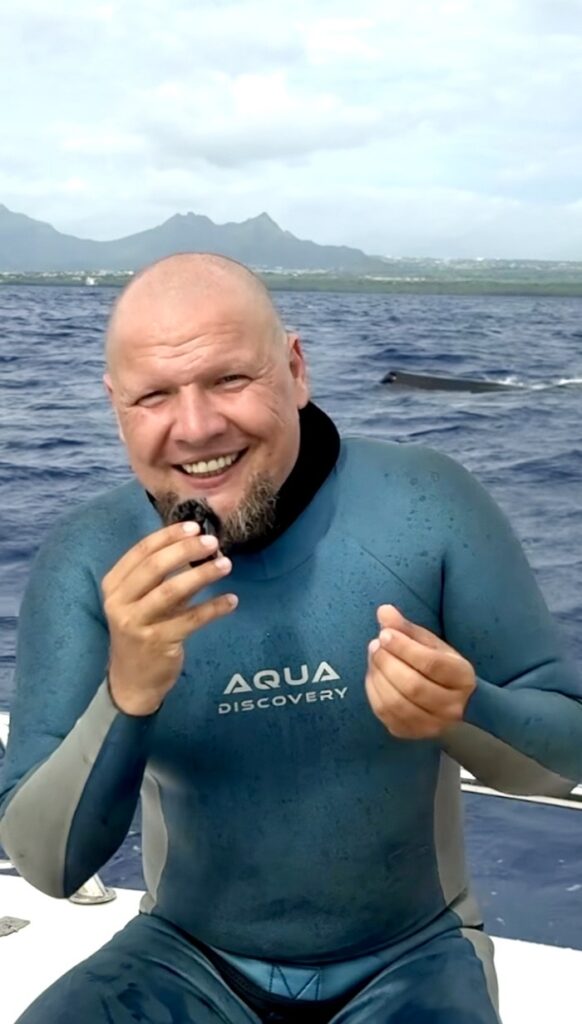
It’s interesting to reflect on what led me here. I grew up in the Soviet Union, where almost all children had the same toys and books. But I happened to own three special books — about whales, sharks and rays, and wild cats. These shaped my imagination deeply. Decades later, I find myself photographing the very creatures I discovered as a child.
As a child, I was also profoundly moved by Jacques Cousteau’s Odyssey. The music and visual storytelling stayed with me for life — and today, I strive to create cinematic moments that inspire others in the same way.
What kind of diver are you, and what do you prefer to film underwater?
I’m a certified Advanced scuba diver, and I use scuba mainly when working with sharks and rays. But when it comes to filming whales and dolphins, I rely on freediving.
My personal best is 4 minutes breath-hold and 35 meters, and I’ve maintained this level comfortably for years. I rarely dive deeper, as I prefer to shoot in natural light, and deeper waters strip away volume and color — especially when filming large marine mammals.
This year, I’m completing my certification as a freediving instructor. I want to guide expedition guests into the water safely and naturally, without scaring marine animals or ourselves.
What inspired your passion for underwater cinematography?
It all goes back to childhood fascination, but as an adult, I found that underwater cinematography offered something unique: a moment of contact and trust between human and animal.
I’ve had incredible interactions with humpback whales, sperm whales, and dolphins, and the most magical moments happen when they initiate the encounter.
There is a unique kind of humility in floating before a massive animal that chooses to approach you. These moments are unforgettable, and I document them not only for film but for advocacy — to help others feel what I feel and care about the ocean as I do.
Favorite filming locations and why?
One of my favorite places is Tonga, where regulations are strict and encounters are intimate. Only four swimmers plus a licensed guide are allowed in the water with humpbacks at one time.
It’s one of the few places where ecological integrity and powerful storytelling can go hand in hand.
I organize expeditions there annually, working with a team to film exclusive footage that we later propose for larger projects with major production companies.
What gear do you use, and how do you stay current?
Right now I film primarily with the Canon R3, which I love for its 6K RAW capability in a compact, ergonomic body.
It allows me to capture footage suitable for National Geographic, BBC, and Netflix, while also staying light and agile underwater.
We are now transitioning fully to Canon, and I also frequently use GoPro and Insta360 cameras for immersive angles, behind-the-scenes content, and social media.
I closely follow new technologies. Tools like the Canon R3 give us cinema-grade power in a travel-friendly package, and I’m always watching for new tools to simplify setups and expand creative options.
Do you prefer natural or artificial lighting?
I generally work with natural light, especially when filming whales and dolphins, who can be disturbed or even harmed by strong artificial light.
But I do sometimes use creative lighting — by placing lights on a separate rig, we can create cinematic effects like backlight, side-lighting, or highlight plankton and particles.
How do you approach composition and behavior underwater?
I often position myself 5 to 7 meters below the surface, shooting upward or across at the subject.
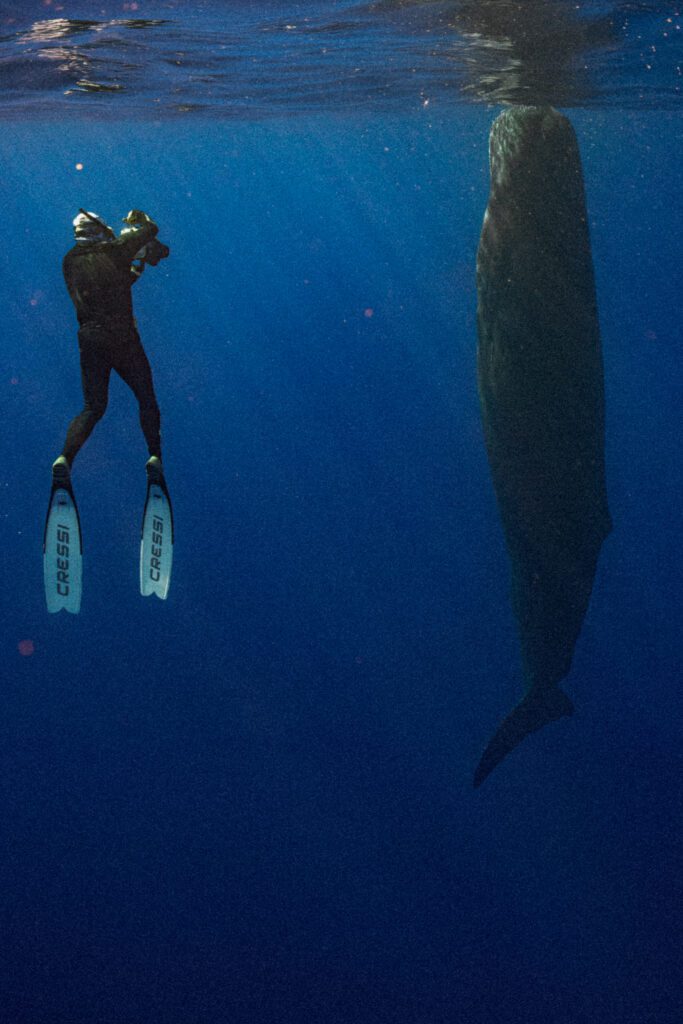
Shooting from this level gives the image depth, drama, and dimension, unlike surface-level shots which can feel flat.
Have you had any dangerous or transformative experiences?
Yes. Years ago, I encountered a longimanus (oceanic whitetip shark) that showed predatory curiosity. I didn’t know how to respond and developed a fear of deep water.
To overcome it, I went on shark expeditions — with tiger sharks, bull sharks, and more. Years later, I met another longimanus — but this time, I was leading a group, remained calm, and filmed close-up shots without touching the animal.
That moment marked a personal milestone and a full-circle experience.
Do you use your work to promote ocean conservation?
Absolutely. I see storytelling and conservation as inseparable.
I’ve filmed on permit in Mauritius, witnessing how tourism impacts cetaceans. Though swimming with whales is technically banned, in reality it’s unregulated.
In my lectures — held in Cape Town, Belgrade (Serbia), Montenegro, Tbilisi (Georgia), Indonesia, Tonga, and wherever I have the opportunity to speak — I urge ethical practices and highlight contradictions in marine tourism.
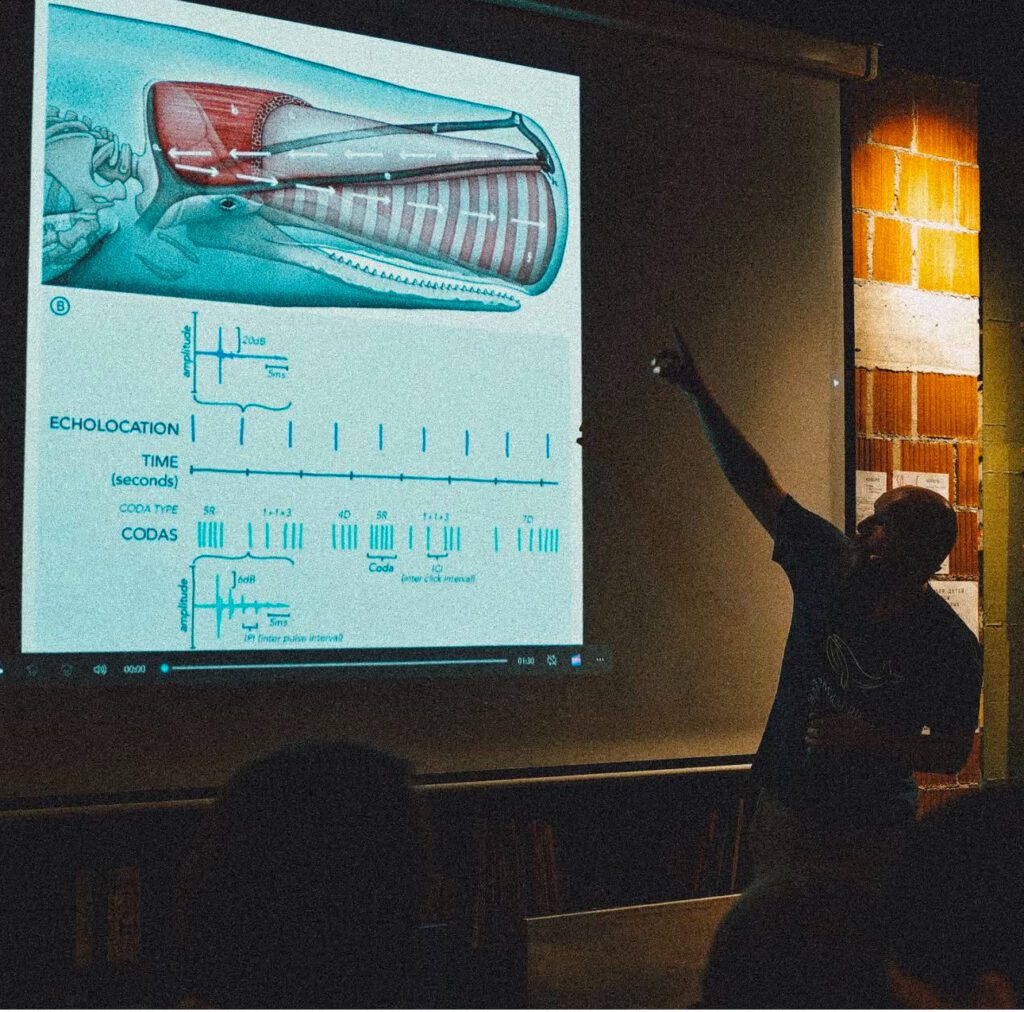
During expeditions, I work with a marine biologist to ensure scientific accuracy and global awareness. On social media, I tell stories of the animals and why they must be protected.
What advice do you give aspiring underwater filmmakers?
Underwater cinematography is a craft — like learning a language or a sport, it takes practice and mentorship.
You need to go on expeditions, work side by side with others, and learn in real-world conditions.
That’s why I always invite people to join my trips. I support with gear setup, camera settings, footage review, and anything else that helps them grow.
What’s next for you in your career?
I want to move from contributing footage to being the primary author and director of feature-length documentaries.
I’ve had work in major productions, but now I want to tell the story myself, to speak for the ocean, and deliver a message that is visually powerful and emotionally compelling.
How does gear influence your work?
Reliable gear is everything. Nature doesn’t wait.
During last year’s Sardine Run, orcas started hunting just as we entered the water. No time to adjust anything — the gear had to be pre-set and fail-proof.
That’s why I rely on Ultralight — because every second and every shot matters.
What advice do you have for filmmakers who want to work with brands?
We need mutual respect and communication between gear companies and independent underwater professionals.
I’m not just a filmmaker — I’m also a professional colorist and editor, with deep post-production experience. I know what usable footage really means, and I have concrete feedback on gear design.
Manufacturers need to listen — not just to large studios, but to those of us who work solo in real conditions.
I believe in building long-term, creative partnerships between makers and users.
What is why I am excited to work with Ultralight.
Thank you, Stanislav, for taking the time to share more about yourself and your work with us. We definitely picked up a few new things, and I’m sure our customers did too. It’s always great hearing how someone finds their way into a field they love—the wins, the lessons, and everything in between.”
For more information, you can find Stainislav at Instagram.