Welcome to Ultralight Camera Solutions, where we proudly offer a diverse selection of camera tray kits specifically designed for Underwater photography. Our kits encompass six categories tailored to underwater equipment and three categories dedicated to cinema gear. In this blog post, we will be highlighting the second category: Underwater Camera Tray kits.
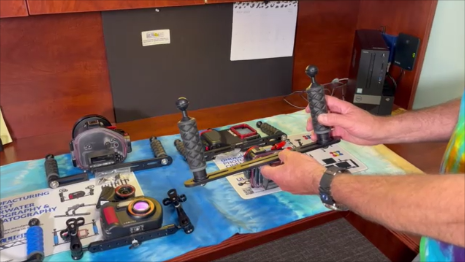
Within this category, we offer seven different kits, each catering to specific needs. Two kits feature single-handle trays, while two others serve as extension kits, such as the CTEXKS-01 and the CTEXKM-01 allowing you to convert a single-handle tray into a double-handle configuration. Additionally, we have one kit that presents an innovative solution to address a common issue. To enhance your understanding of each category, we have provided accompanying videos on our YouTube channel. You can find the link to the video at the end of this blog.
For those seeking a single-handle tray option, we offer two choices. The first, the CTKS-01 shown below, comprises a TR-D tray paired with a TR-DHB handle, designed for smaller point-and-shoot cameras such as the Olympus TG-6. The second option, the CTKM-01 (not shown) combines a TR-D tray with an AC-H handle, catering to larger cameras resembling mirrorless models.
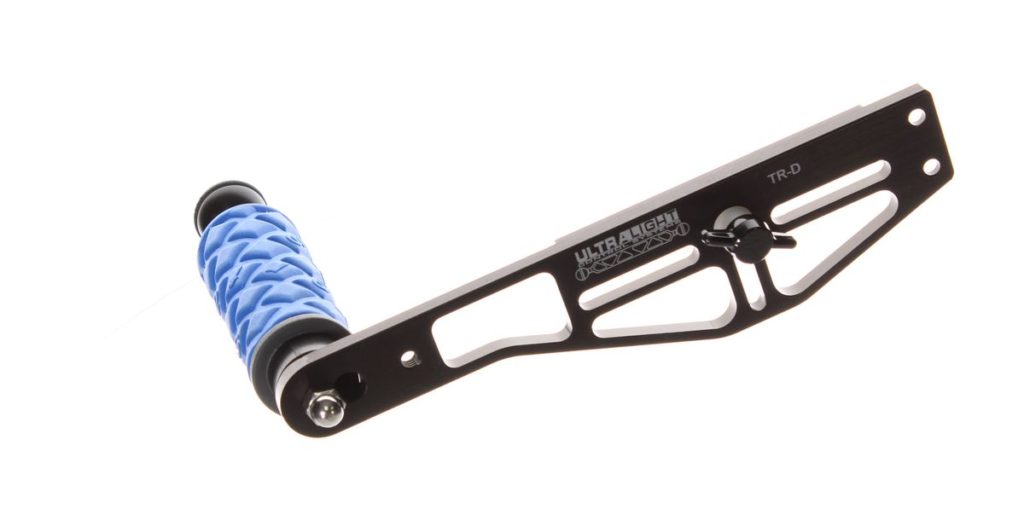
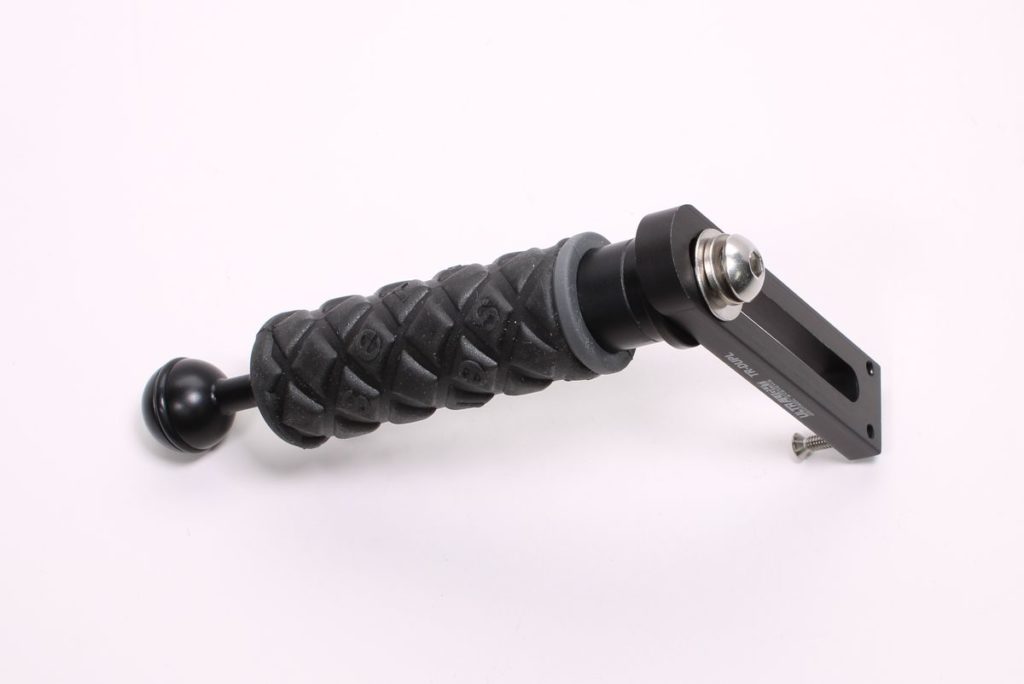
Our extension kits are perfect companions for the aforementioned single-handle trays, allowing you to transform them into double-handle setups. The CTEXKS-01 (not shown) uses a TR-DUP extension, in combination with the TR-DHB handle, which converts the TR-D tray into a double-handle tray. Alternatively, the CTEXKM-01, shown below uses the TR-DUPL extension, along with the AC-H handle, which can be added to the TR-DM tray, achieving the same result. Adding a second handle enhances stability and provides more options for attaching a light or strobe & can be your underwater video lighting solution.
For those in search of double-handle trays, we offer two options. Both utilize AC-H handles, accompanied by either the TR-DM2 tray or the TR-SBLD tray. The CTKL-01 uses the TR-DM2 tray and is best suited for medium-sized camera housings that require two bolts for attachment. On the other hand, the CTKL-02 that uses the TR-SBLD tray is ideal for larger cameras and compatible with Kraken or SeaLife iPhone housings. Similar to the TR-DM2 tray, they also utilizes two bolts for housing attachment.
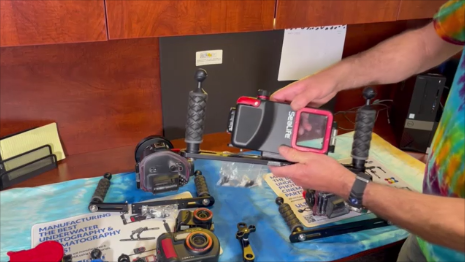
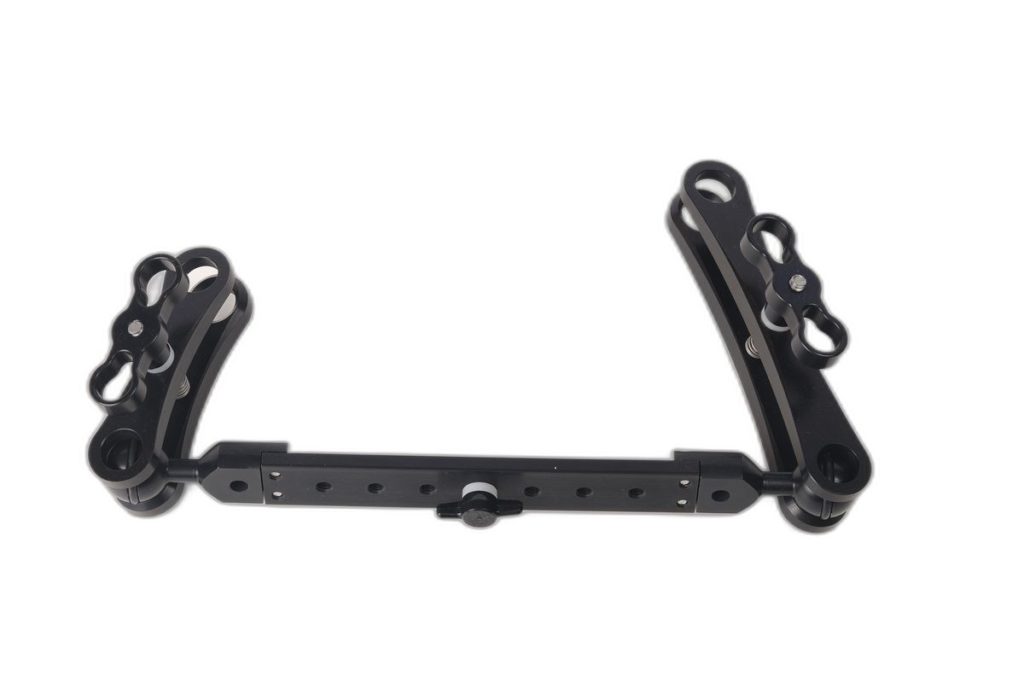
Last but certainly not least, we present our innovative compact tray, the CTKS-01 featuring the DB-CB10 arm, one AC-CSL clamp, and one AC-CSLXL clamp. This setup works extremely well as a stable platform for smaller cameras, GoPros, or video cameras using a 1/4"-20 threaded hole. Because of its overall size, it works well for beach divers and others looking for a more compact solution.
At Ultralight, we pride ourselves on the extensive options we provide. If you cannot find exactly what you're looking for among our offerings, please don't hesitate to Contact Us. We are always delighted to assist you in finding the perfect underwater video lighting solutions for your needs.
Here at Ultralight, we have so many options that if you do not find what you are looking for, please contact us. We are ALWAYS happy to help!
Links to camera tray kits:
Welcome to Ultralight Camera Solutions, where we proudly offer a selection of caged camera tray kits specifically designed for Underwater photography. Our kits encompass six categories tailored to underwater equipment and three categories dedicated to cinema gear. In this blog post, we will be highlighting the third category: Underwater Caged Camera Tray kits.
Within this category, we present three distinct kits, each carefully crafted to accommodate a range of needs based on the camera or iPhone housing employed. All three of these kits introduce innovative solutions that revolutionize the approach to setting up your camera rig. To further enhance your understanding of each category, we have included a video on our YouTube channel. You can find the link to the video at the end of this blog.
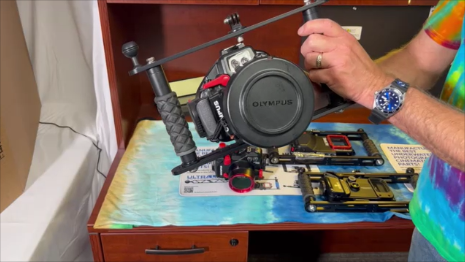
But first, let's see what a double-caged camera tray is and why it might be a desirable option. This solution emerged from the desire to have a robust wrap-around tray capable of securely holding various additional accessories, while also providing better support for those accessories. And thus, the double-caged camera trays were born.
These kits consist of two identical trays bolted together, with two handles positioned in between. The top center of the tray features a GoPro mount, while two 1" ball mounts serve as attachment points for arms. One configuration is the DTK-MCXLH and comprises two TR-DM2 trays, two AC-H1/4XL handles, one GP-TRI-MOUNT for GoPro, and two BA-HB ball mounts.
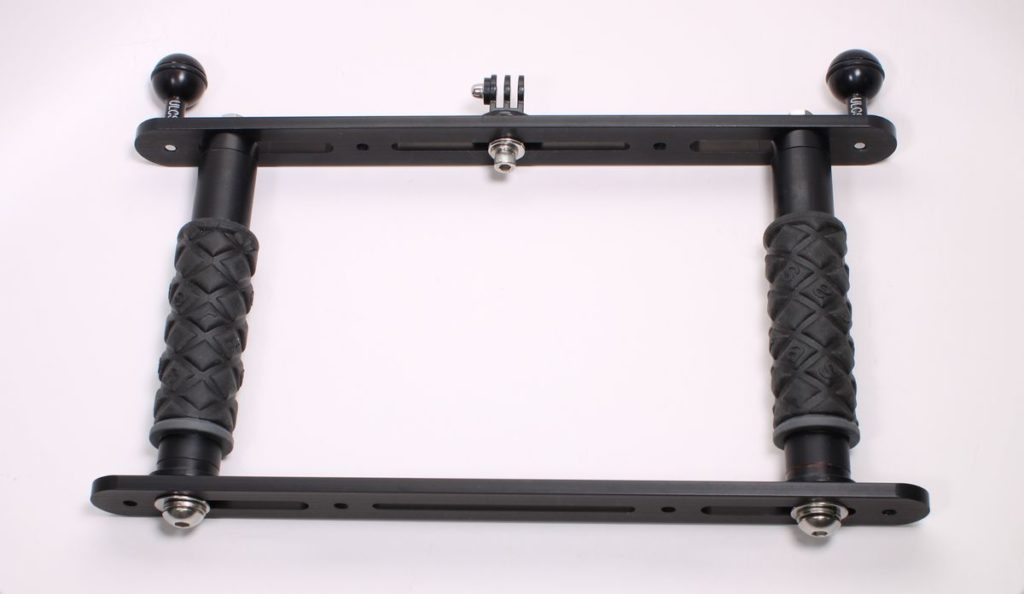
Two of the kits utilize the longer TR-SBLD tray. The first kit, DTK-LCXLH (not shown) includes two TR-SBLD trays, two AC-H1/4XL handles, one TRI-MOUNT, and two BA-HB ball mounts. The second kit (no longer available), DTK-SCSH shares the same components but features a shorter handle, the AC-H1/4.
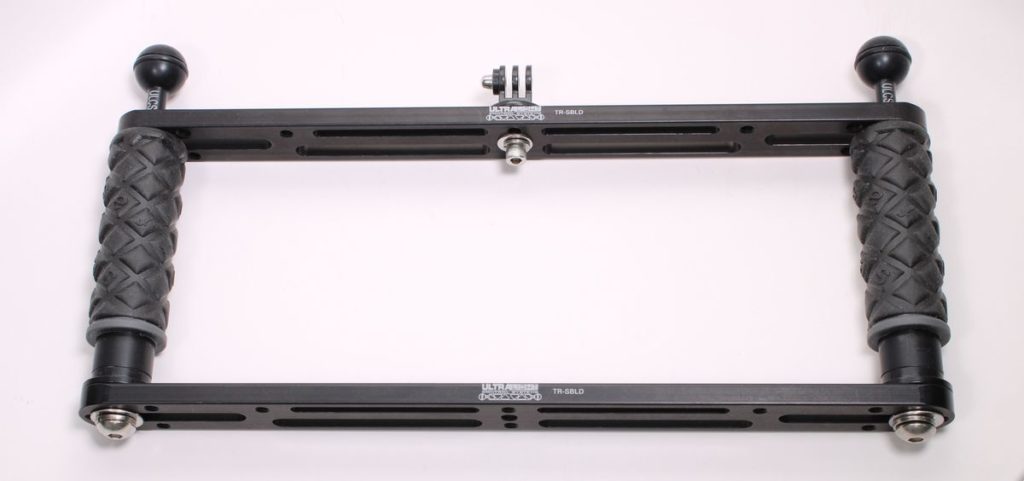
Our caged camera tray kits are compatible with various camera housings and iPhone housings. For the Kraken iPhone housing, the kit, DTK-SCSH with shorter handles and the TR-SBLD tray is the optimal choice. However, the SeaLife iPhone housing, which possesses a vacuum port on the top, is better suited for the kit, DTK-LCXLH (not shown) with taller handles and the TR-SBLD tray. If you plan to use a small video camera that utilizes a 1/4"-20 mounting bolt, simply remove the GoPro mount and use the same bolt to attach the alternative-style video camera to the top tray.
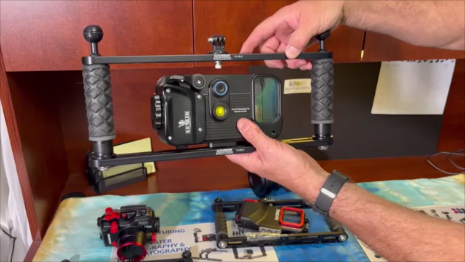
We invite you to explore the versatility and functionality of our caged camera tray kits, designed to accommodate your unique photography needs and provide an elevated shooting experience.
If you have any questions or are not sure which kits will work for you please feel free to Contact Us. We're always happy to help!
Links to caged camera tray kits:
If you haven't heard, we are no longer Ultralight Control Systems. We are now Ultralight Camera Solutions, and of course, that means a new logo and a new website, plus a whole bunch of other goodies.
We now have lots of different types of kits for both Underwater and Cinema use and in this blog, we're going to do a quick overview of them. Currently, we have six different underwater kits/ packages and for our cinema customers, we have three, making up a total of almost 70 different new kits/packages.
In our Intro video, I briefly went over the new kits and types of kits and when you get time I highly suggest checking that video out. Following up to this we have a series of videos covering each category of kit.
Why all the different kits/packages you ask? Great question! The short answer is that we listened to our customers to make purchasing our products easier. The long answer is, we have over 200 different products for both underwater and cinema use and many go together or can be mixed and matched to create a setup of one kind or another. For underwater use, you might need clamps, arms, trays, extensions, ball mounts, and more to put together a setup for a camera, housing, strobes, lights, and other accessories. For cinema use, you might need clamps, arms, ball mounts, monitor mounts, etc to set up monitors, and sound systems, and do grip work. With all the products we offer, it can be hard for some to visualize or conceptualize what is needed, and with all the new kits, finding what you need and adding to it later becomes so much easier.
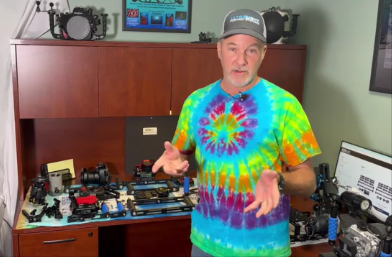
These new kits are not only great because we covered lots of different combinations but there are some that showcase some brand new products we have such as the double caged camera trays and sled setups mainly for larger cameras with big dome ports.
The new kits we have for underwater are camera arm kits, camera tray kits, caged camera kits, GoPro & video kits, sled kits, and tripod kits. The new kits we have for cinema users are cinema arm kits, Cardellini arm kits, and tripod kits.
Below is some basic information on each category of kit
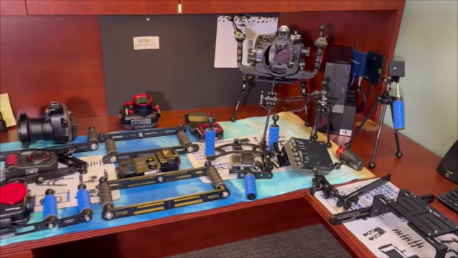
Underwater kits:
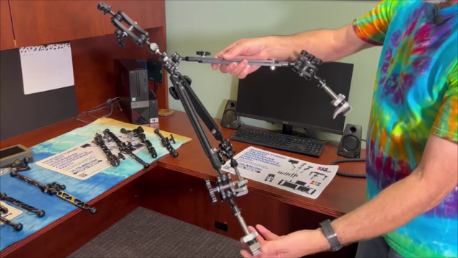
Cinema Kits:
As you can see we have LOTS of cool new kits for all types of environments and applications with some being brand-new products. To see all the new kits, please visit our website and if you have any questions, feel free to Contact Us.
Face it, Divers have LOTS of stuff. Between their dive gear and personal items there is much to keep track of and misplacing or losing some of these items happens to everyone. It is a problem that will never stop! If you lost or misplaced your dive gear would you like it back? Who doesn’t want their gear back when they lose or misplace it? I know I would and I am sure everyone would want the same but still, the problem persists. Because of it, this blog will cover ways to mark and identify your equipment and personal items in hopes it will be easier to get back when the inevitable happens.
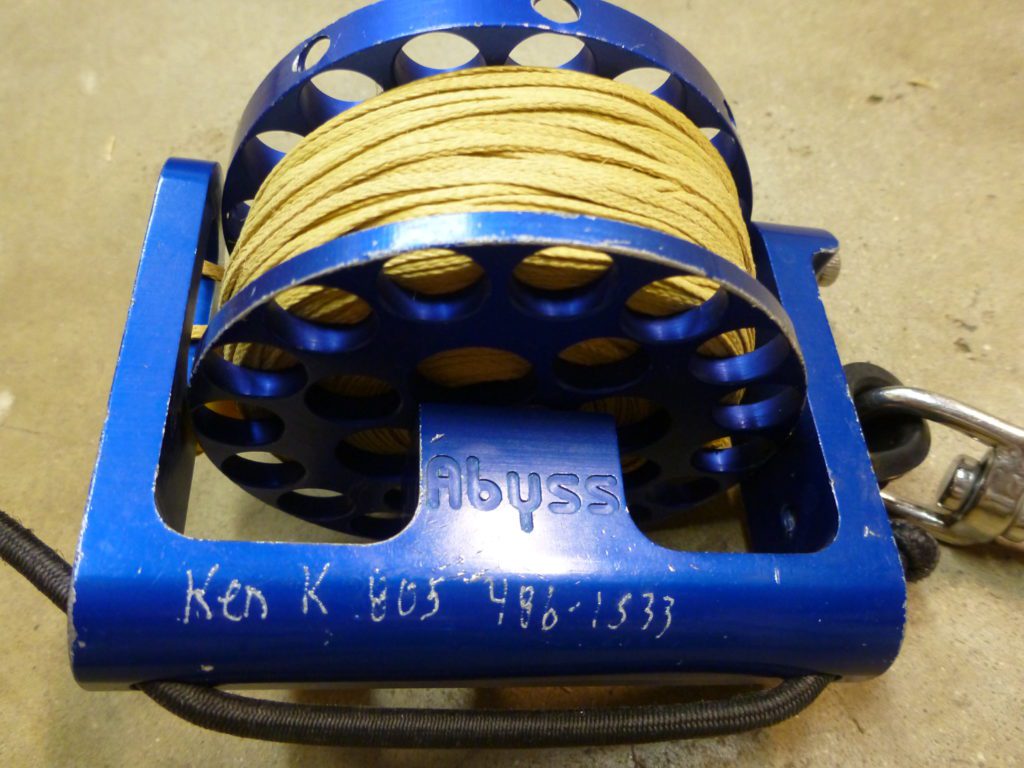
To bring home the point, I’ll tell you a few quick stories and the last one will really kick you in the butt with the reason why things need to be marked.
Story 1
To make a long story short I had a Desert Star dive tracker that my dive buddy ended up with and it dropped overboard. At the time he was not able to retrieve it. I was also not aware of any of this. Then one day, I received a call from a commercial diver who was working off Anacapa Island. He started by letting me know he found something while working and proceeded to describe it. I had no idea what he was talking about because I hadn't lost anything and then a light bulb went off inside my head. How did the commercial diver know who to contact? Easy, because I had my name and telephone number engraved on the dive tracker. After talking to my buddy who lost it turns out it had been in the ocean for about 12 months and it still worked.
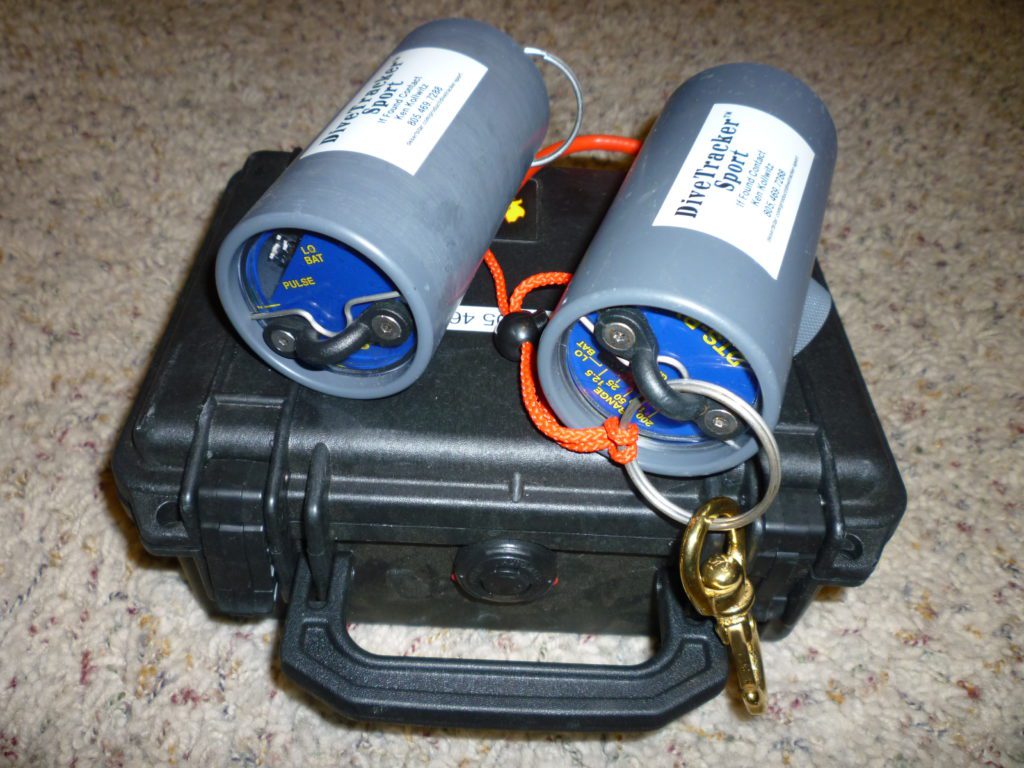
Story 2
My buddy and I were on a 2-day dive trip on the Peace anchored for the night in Johnsons Lee, Santa Rosa Island. We did a late afternoon dive and my buddy found a very nice Scubapro speargun. Upon checking, it was not from anyone on the trip we were on and there were no markings on it as to who it belonged to so now for the past 20-plus years I have had a very nice Scubapro spear gun that has been used to catch many fresh fish dinners.
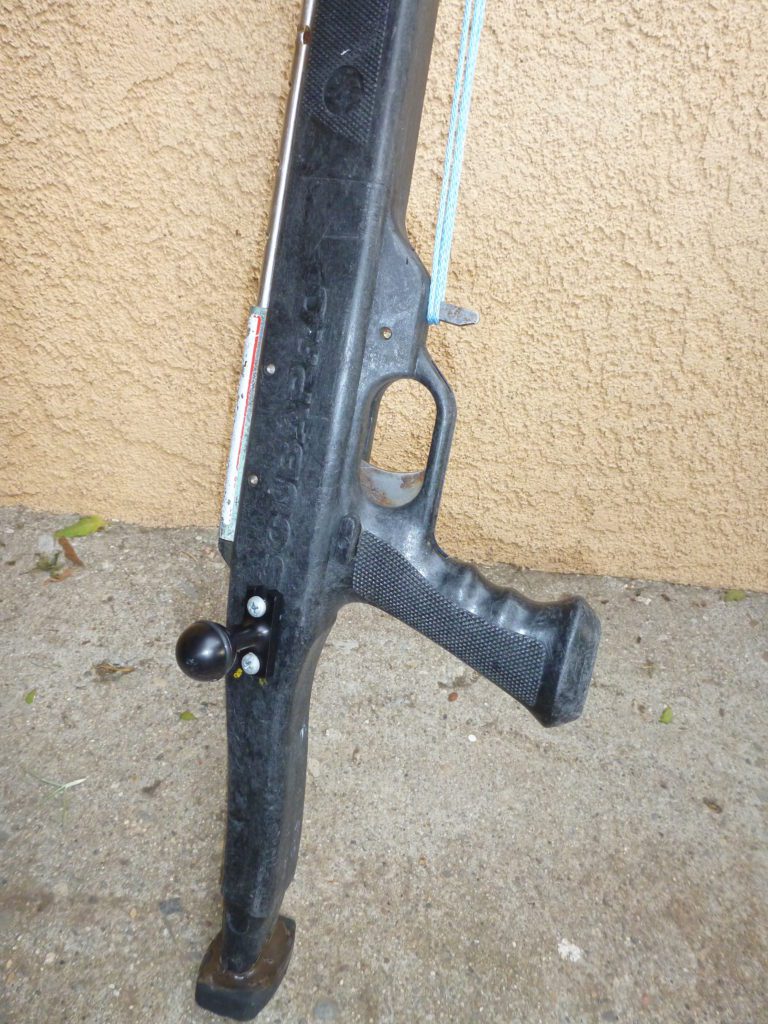
Story 3
Now that I run dive trips for my business, Channel Islands Dive Adventures I usually take home any personal items that are left on the boat. On a trip I had to West Santa Cruz there was a BC (nice one) left behind so I brought it home, rinsed it, and proceeded to look for some identifying mark or name of which I found nothing. This BC also had a small knife and wrench in one of the pockets. I emailed everyone I could think of and mentioned it to the boat owner just in case they got a call. As you can guess no one claimed it. I finally donated it to another deserving diver.
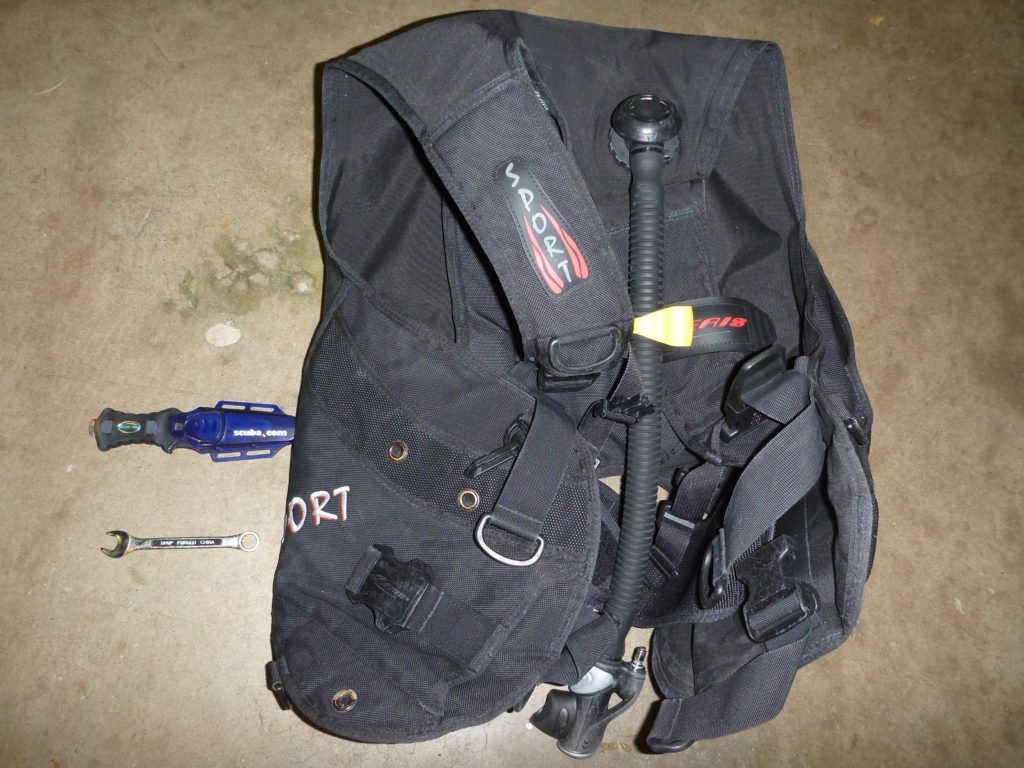
Story 4
This is the kick yourself in the butt story. I was diving one of my favorite wrecks off the coast of California, The Gosford. Somehow during the dive, my titanium dive knife fell out of the sheath. I had my camera with me so I was probably too focused to notice till I got back to the boat. The following year I was back diving the wreck without my camera and I found a knife up towards the bow in a section with chunks of coal. The knife was incrusted with stuff but I am always picking up things for good yard art. After getting back to the boat a crew member was looking at the knife and realized it had my name on it. Turns out I found my own knife! Because it was made out of titanium it cleaned up looking like new and I still use it today.
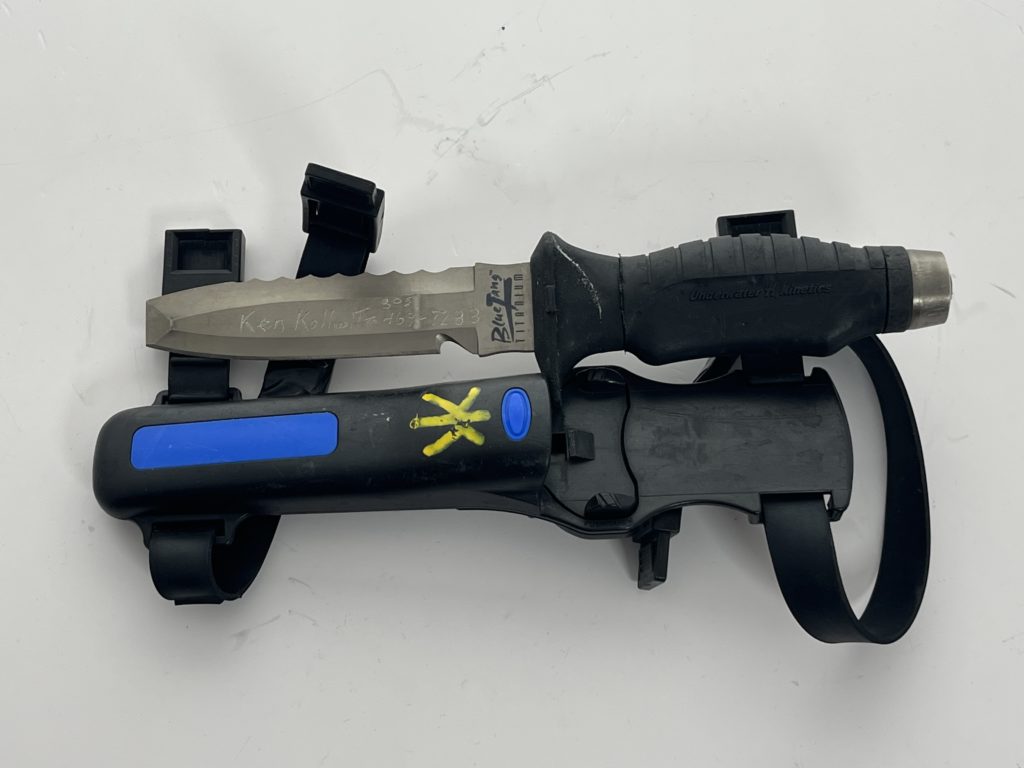
So now I ask the original question, when you lose or misplace your dive gear-do you want it back? If you do then what do the 4 stories have in common which is not really all that common? They are marked with a name, telephone number, and /or special marking like a branding image. The commercial diver told me he finds stuff all the time but how is he going to find the owner when there is just a name (usually only the first name or initials) on it? So now you know the secret.
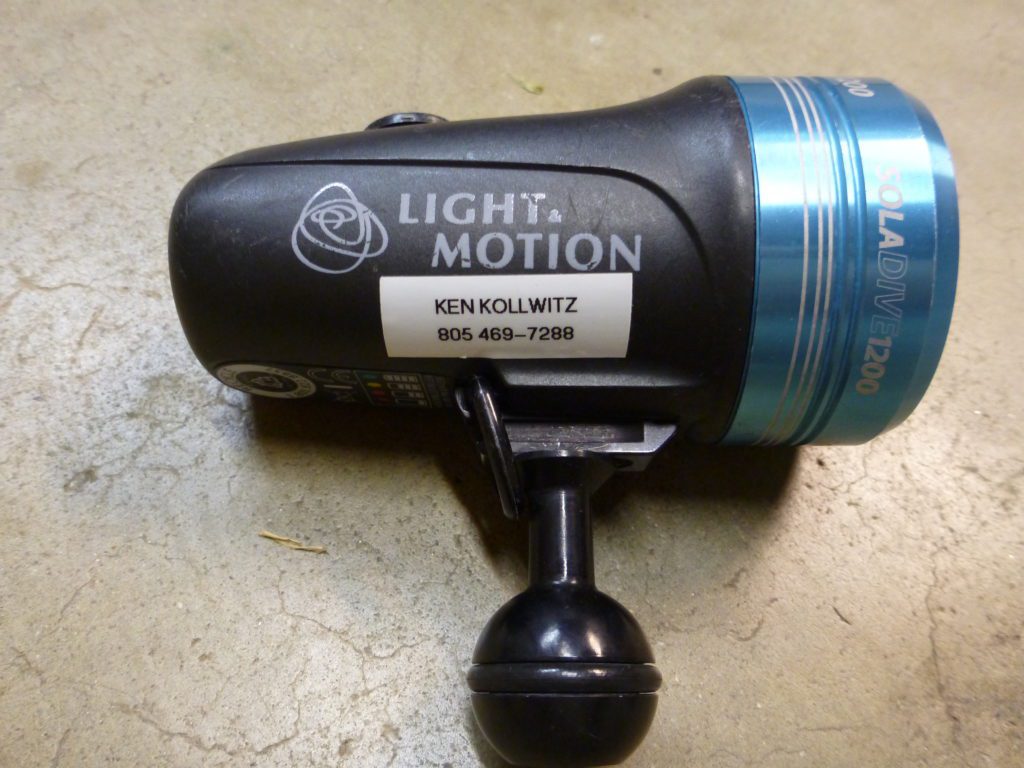
You more than likely heard already that you will lose dive gear and if you haven’t yet your turn is coming and I can tell you from experience that it will happen. On a 2-day trip, there were 2 wetsuits that had been left behind. Had they had a name and number marked inside I would have called the owners immediately helping them to avoid a trip back to the boat or some extra shipping charges.
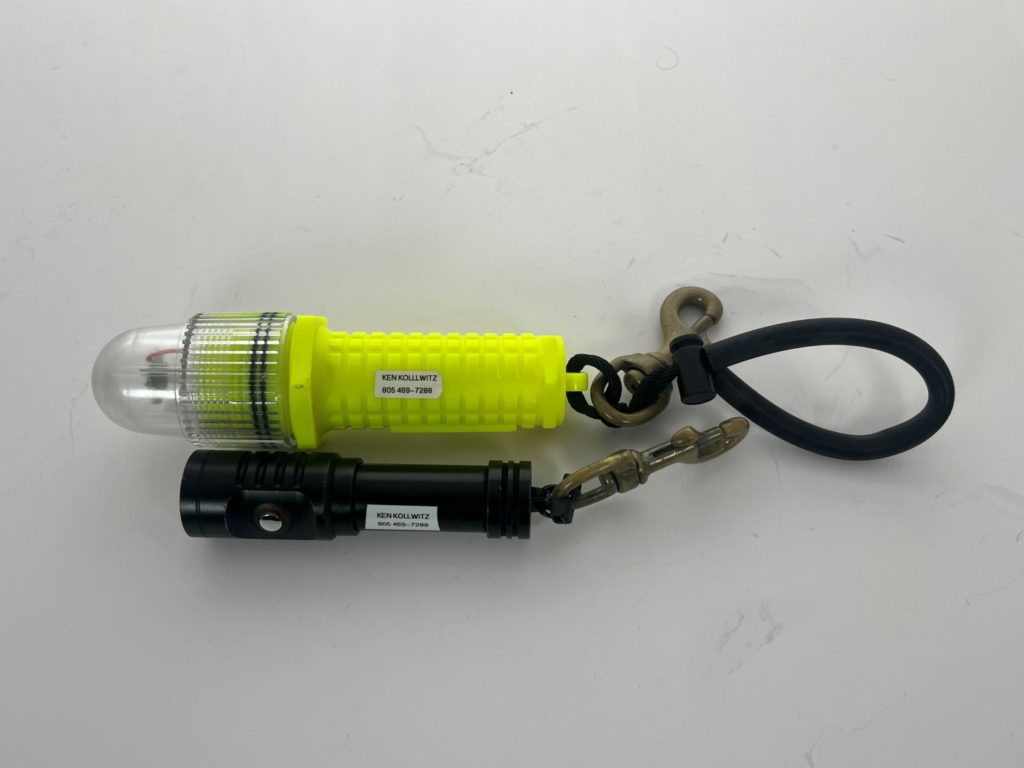
You don't need to mark every single item and this is where a little thought is best. Think about what items you could lose while diving especially if doing beach dives. It's easy to lose masks, fins, snorkels, or anything that is not attached to you. Maybe after the dive, think about things you could leave behind like towels, chairs, coolers, dive computers, tanks, regulator setups, and so on. On boat trips and vacations, it's very easy to leave things behind or get your items mixed up with others because things get scattered all over. Items to think about would be jackets, clothing, phones, charging cables, laptops, batteries, chargers, GoPro's, cameras, and so on. Basically, mark anything that is important to you. Just remember that marking things doesn't always mean you will get them back but the chances are much higher that you will.
What is the best way to mark stuff permanently? For me, my first choice is to make a small sticker using my Brother P-Touch label maker. Because you can use the label maker for so many things and the stickers will attach and stay on a smooth solid surface for years this is the best choice. These labels are excellent for camera gear, strobes, GoPro's, lights, dive computers, and more.
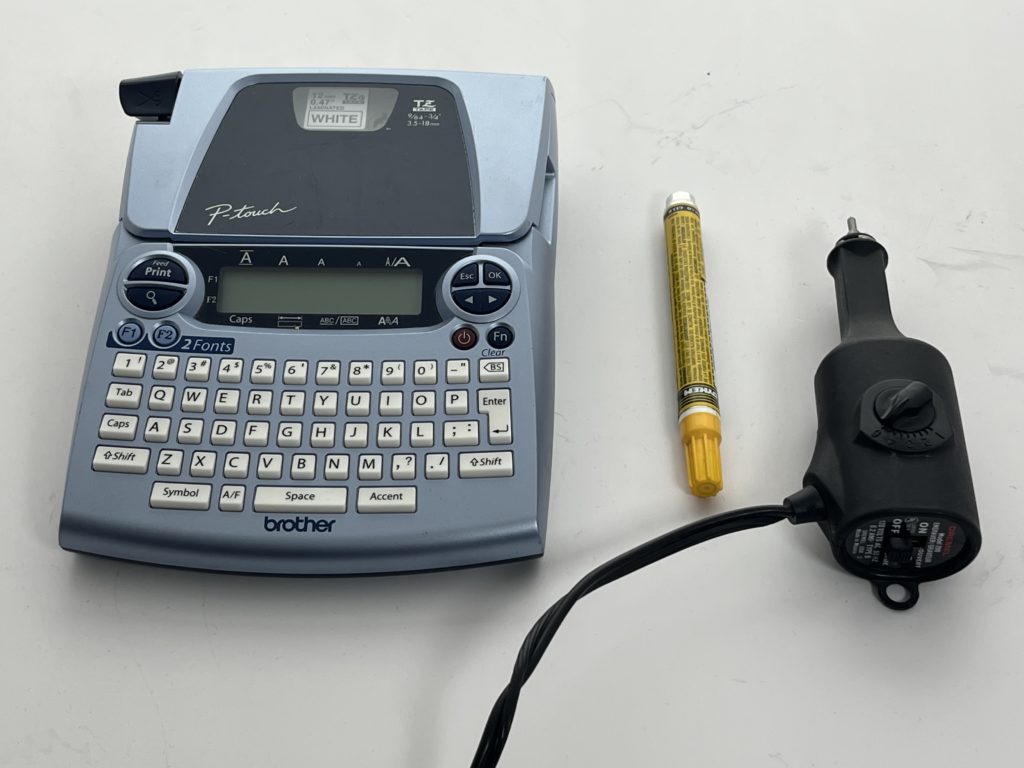
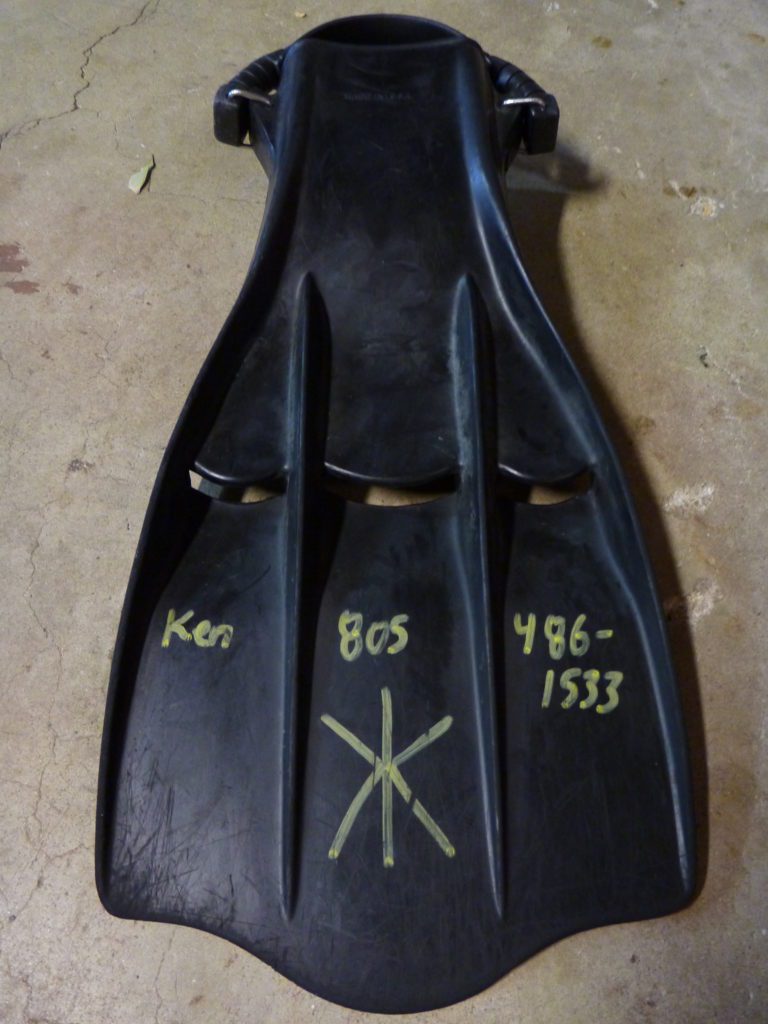
My second choice is to use a yellow or black paint marker which you can buy at any hardware store. The paint markers are usually best for larger lettering and numbering. It is very hard to write small details with one. A paint marker works great on fins, snorkels, wetsuits and accessories, buoyancy compensators, etc. My third choice is to use an engraver. This is best for hard plastic, metal, and surfaces where a sticker will not stick. After engraving, I usually mark over the area with the paint marker and wipe off the top so the paint is in the engraved area. I use this method for my regulators, knives, BC plates, mask skirt, and more. I even have engraved the hard plastic skirt around my mask, knife holders, regulators, and BC back plate.
The main idea is it doesn’t have to be visibly large, just noticeable enough for someone looking for the owner and wanting to do the right thing!
Here at Ultralight Camera Solutions, we pride ourselves in manufacturing quality underwater photography and cinematography parts, all USA made with USA materials. Our assembly and packaging are done in-house as well at our warehouse in Oxnard but occasionally there are some problems.
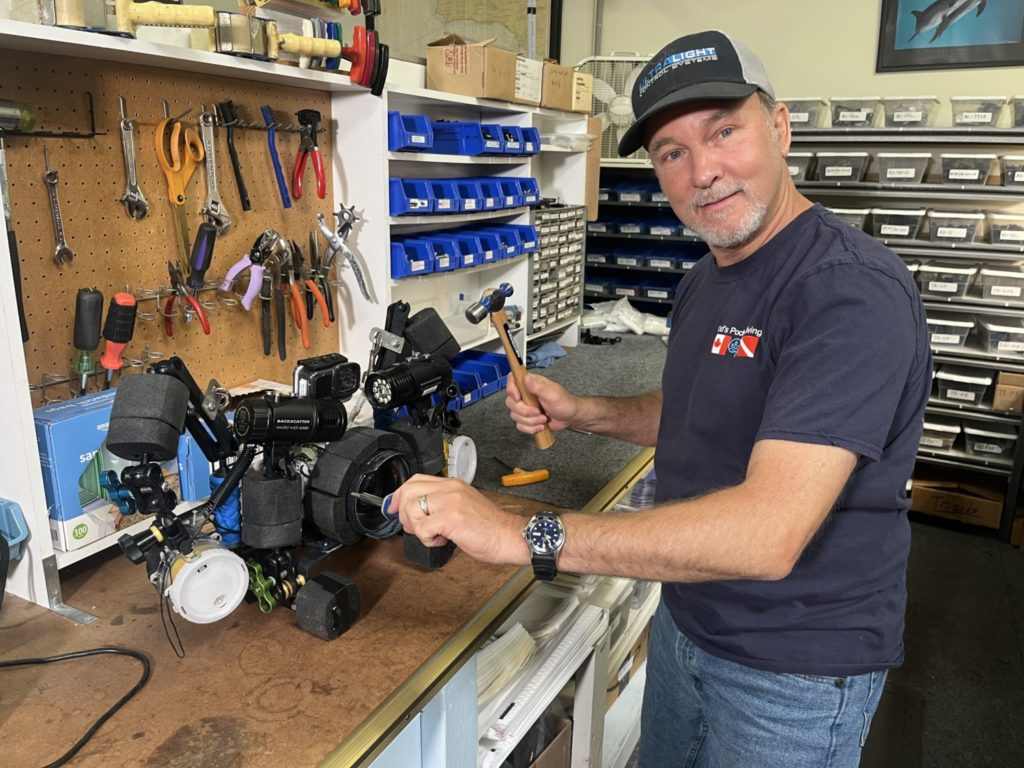
Our customer service is extremally important to us and we are ALWAYS happy to help. Owner Ken Kollwitz has been on the other end as a customer and fully believes in the Golden Rule, "do to others what you would have them do to you". For such a simple idea it seems many companies have forgotten. Here at Ultralight, this is one of our main goals, to offer the BEST customer service possible.
This also carries forward to our warranty and Terms of Service. We believe in making products that last, no matter what type of environment they are used in and because of this, we offer a lifetime warranty on all our products. As we all know, there's always the possibility of a problem, whether it is a malfunction of a product, missing parts, or a customer issue. No matter what the issue is, email us at info@ulvs.com or give us a call at (805) 485-0233 and we will be happy to help
One important thing to remember is that Ultralight is a small company. It's not like calling a big company which can be very hard to get a hold of somebody who can help. You won't go through one of those automated phone systems that take forever and totally frustrate you. Call us and more than likely you will get Ken, the owner of Ultralight. We stand behind everything that we manufacture, and we're here to help. Also, one more very important thing is that we are ALWAYS happy to hear your feedback, good or bad because we can't make needed changes if we do not know where those changes are needed.