
At Ultralight, we believe our gear is only as good as the underwater photographer, cinematographer, or camera assistant it supports and no one showcases that better than our Brand Ambassadors. To give you a closer look at their images, stories, and the passion behind their work, we asked each Ambassador a series of thoughtful questions about their backgrounds, favorite rigs, and what inspires their photography and filmmaking. It’s our way of sharing not just how Ultralight gear is used, but also the creativity and spirit of the people who bring it to life.
Please share a little about yourself and the journey that brought you to where you are today.
Hi, my name is Bryan Blauvelt, and I live outside of Houston, TX. I’ve been diving since I was 12 years old (so, for almost 35 years now), and I teach SCUBA seasonally for Texan Scuba.
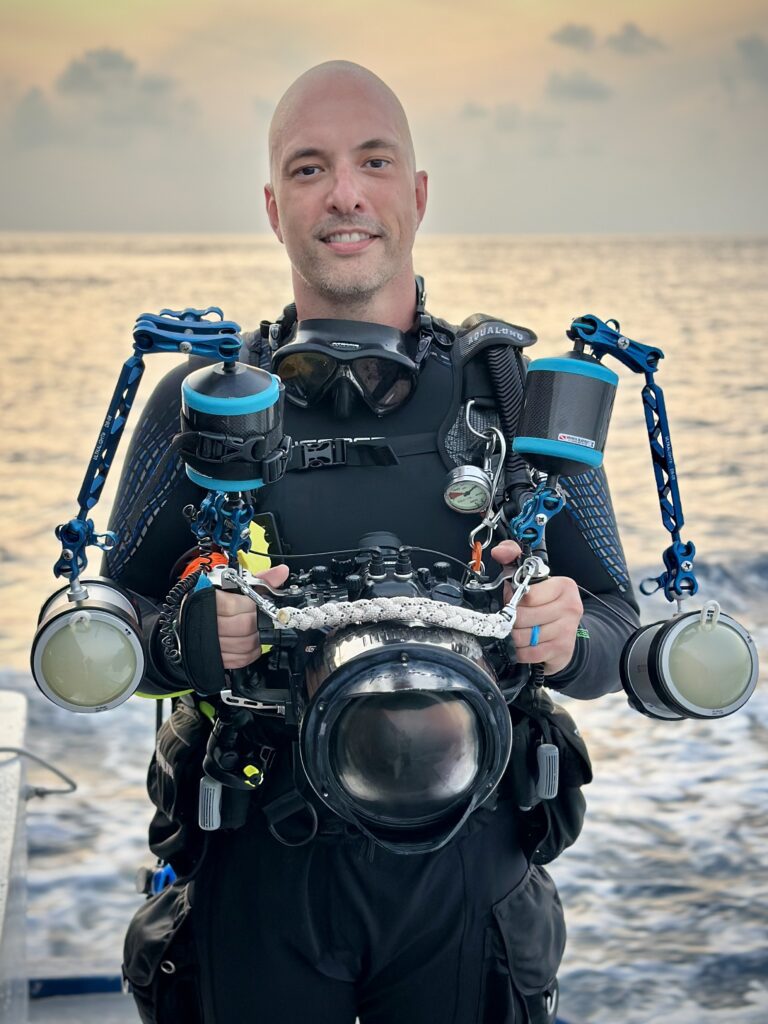
I’ve been fascinated by the ocean for as long as I can remember, and when I was a kid, my older half-brother, Harry, was a diver. He took me snorkeling for the first time in Hawaii and encouraged our dad to let me try scuba diving when I finally met the age requirement. Our dad was an avid golfer, so without my half-brother as a diving role model, my life would probably have turned out very differently!
What inspired you to specialize in underwater photography?
As a newly-certified junior open water diver, I immersed myself in the underwater photography featured in magazines like Skin Diver. My imagination soared, envisioning soft corals, oceanic manta rays, and schooling sharks beyond my limited diving experiences in Hawaii and the Caribbean.

My first underwater camera was a Sea&Sea MotorMarine II point-and-shoot 35mm film camera, which I had seen advertised in Skin Diver. That little yellow plastic camera didn’t last more than a couple of years before I flooded it, but that’s where I got my start capturing what I see underwater.
Things got more interesting when I first picked up an SLR camera in a high school photography course. We focused on the basics like using shutter speed and aperture to create a proper exposure, composition, light as a subject, and even developing our own film and printing our own images in the darkroom. I bought an Ikelite housing and a couple of strobes for the used Nikon N8008 camera that my half brother Harry had given me. I dove with this setup for a couple of years before I became preoccupied with finishing college, starting out a new career as a web developer, getting married and starting a family. That led to a 15 year gap before I seriously picked up a camera again, but I found my way back to it. Better late than never, right?
Can you share a memorable moment or experience from your underwater adventures?
One of my absolute favorite experiences over the years was swimming with an incredibly playful humpback whale calf, named Nudge, while visiting the island nation of Niue in 2023.

If you’ve ever gazed into the eye of a humpback whale, you know what a special experience swimming with them can be. This particular calf didn’t just give us one mind-melting encounter. We ended up playing with this baby whale for the better part of two weeks, with great interactions happening day after day until our faces hurt from laughing and smiling so much.
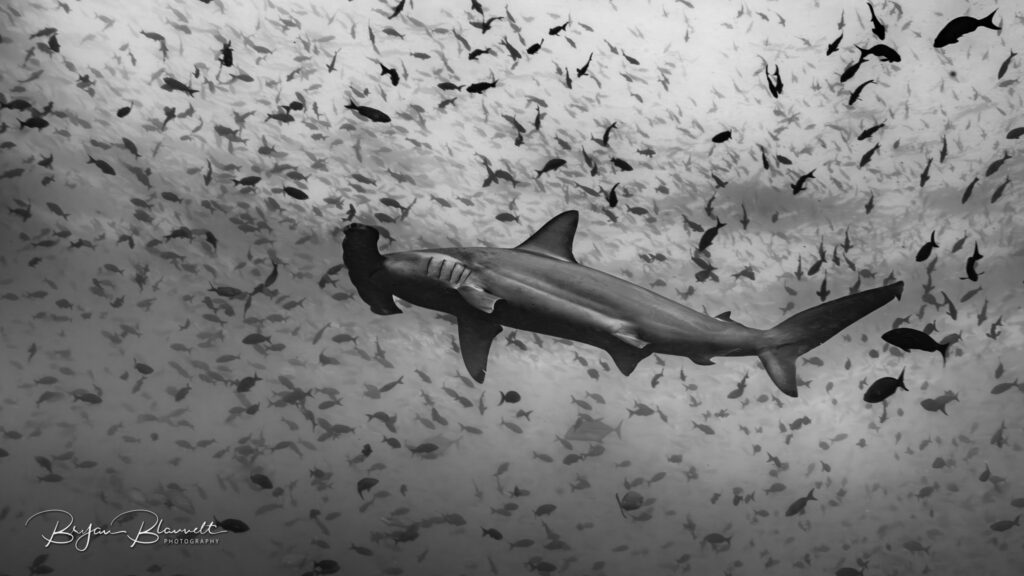
Another experience that really stands out to me was a dive at Darwin Island in the Galapagos. We had a full hour of schooling hammerhead sharks, thick walls of game fish swimming everywhere, and multiple whale sharks passing by — all on the same dive! When our group surfaced at the end of our bottom time, needless to say we were all ecstatic.
What camera setup do you currently use for underwater photography?
I shoot a Sony A1 camera inside a Nauticam NA-A1 housing. I primarily shoot with two Retra Pro Max strobes, and I also use a pair of Backscatter Mini Flash 2 strobes for some macro applications. My lens of choice for wide angle work is typically my Sony 28-70mm behind a Nauticam Fisheye Conversion Port (FCP) or Wide Angle Conversion Port (WACP1). I also shoot a Canon 8-15mm fisheye lens behind a Zen glass mini dome or a Nauticam 8.5” acrylic dome. For macro, I shoot the Sony 90mm macro lens with the Nauticam SMC-3 and MFO-1 diopters.
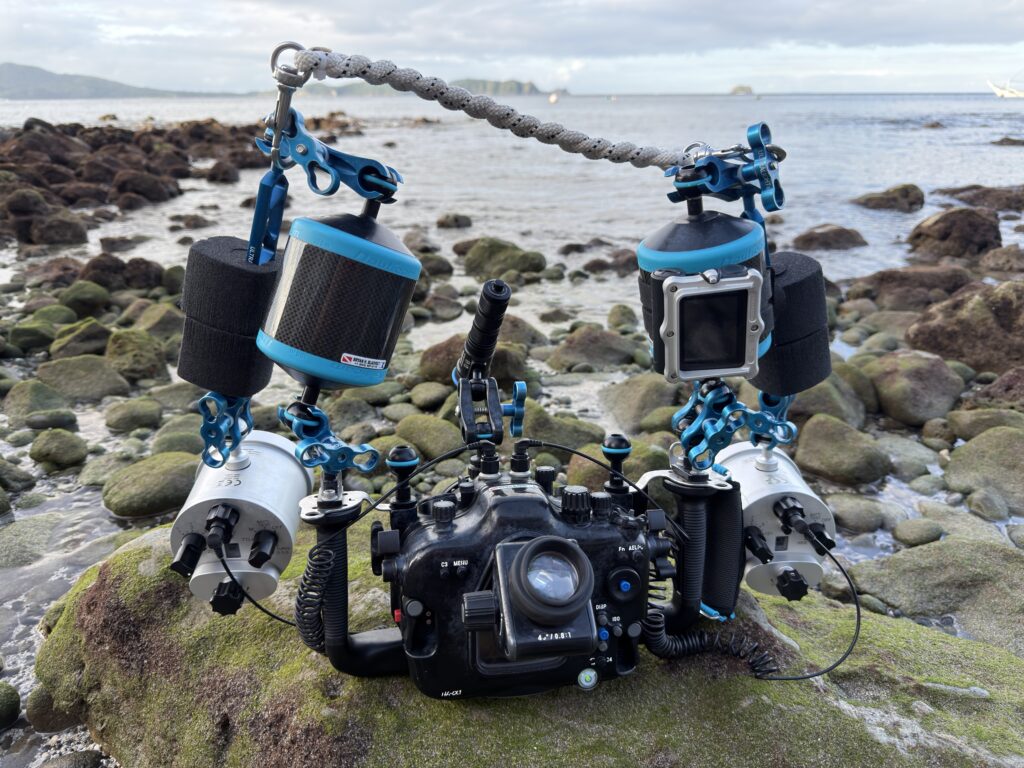
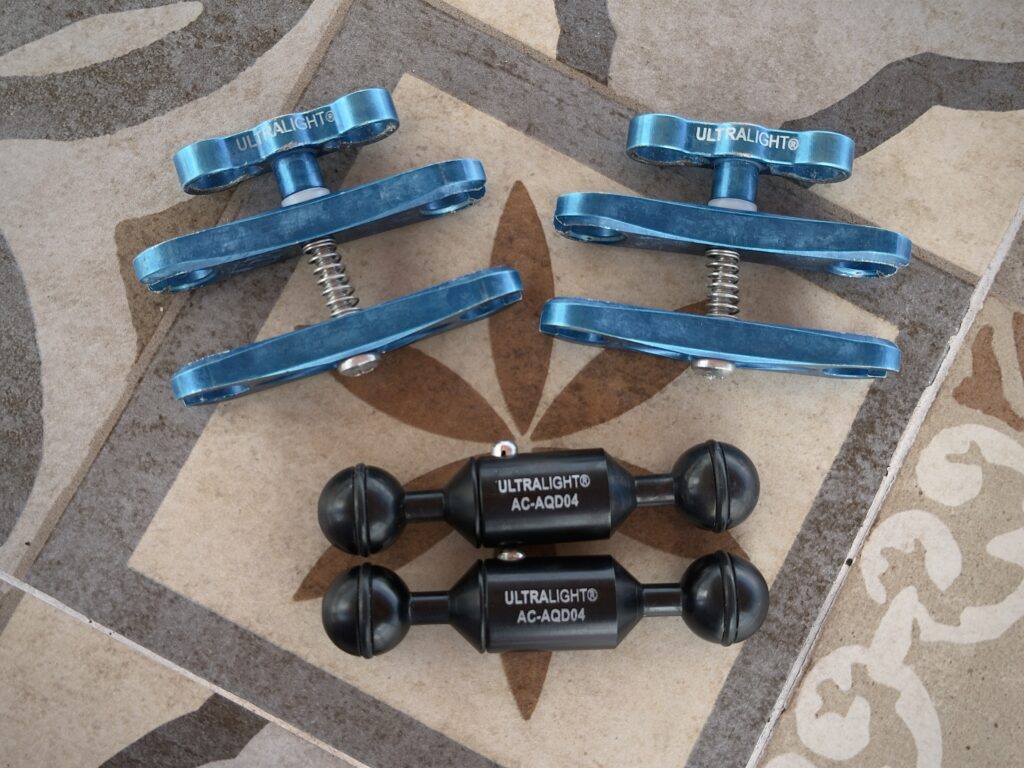
Since I shoot multiple configurations with my rig, I use various combinations of Ultralight aluminum arm segments combined with Nauticam carbon fiber float arms to get my light placement and overall trim and buoyancy dialed in. I use Ultralight double cutout clamps (2 x AC-CSLSK2 and 4x AC-CSSK2) to connect my arms and strobes ensuring I have maximum flexibility in placement for those tricky lighting situations.
Do you prefer macro or wide-angle photography and why?
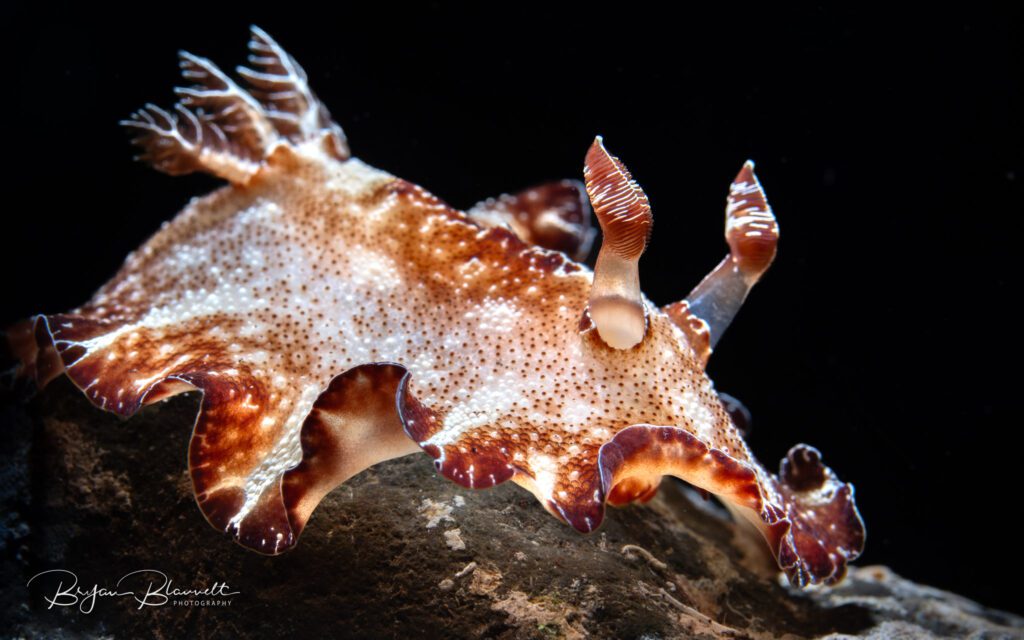
I shoot quite a bit of both macro and wide-angle, but I really love the complete creative freedom that comes with macro photography. With each frame I start from camera settings that will produce a solid black frame, and then I get to decide what I want to add back in, and how I want to do it! It really can be like my own little photo studio underwater where I have complete control.
I love wide-angle shooting as well, but I find especially with bigger animal action, a lot of the artistic compositions come down to luck with the animals and a quick reaction time (thinking about striped marlin and bait balls in Magdalena Bay as an example) versus careful planning and execution.
How do you stay updated on the latest techniques and technologies in underwater photography?
Some underwater photographers tend to keep their productive dive sites and favorite techniques to themselves, but a lot of us are happy to share and collaborate as well. One way I have kept my own knowledge and skills sharp is by participating in underwater photography workshops. These group trips bring like-minded people together on the same dive itinerary, usually with a trip leader that provides some sort of teaching sessions as well as regular image reviews. I find the image reviews to be valuable for learning from others as well as the instructor - everyone has been diving on the same sites, but the images created run the gamut of styles and techniques.
Besides shooting as much as I can and meeting other photographers out in the field, I also stay up to date by following newsletters such as InsideScuba.online or watching The Underwater Photography Show on Youtube. Social media groups and websites like Waterpixels are also good places to connect with people to share images and ideas.
How do you think underwater photography can contribute to marine conservation efforts?
Underwater photography and videography play a huge role in marine conservation efforts today. Most people will never see a shark or a coral reef for themselves, and providing a window into a world that is alien to so many people can be an effective way to communicate how special and important that world is.
On the flip side of that coin, underwater photographers and videographers are on the front lines as witnesses of what is being lost as well. There is a balance between showing the beauty of underwater life and the negative impacts that human activity that can inform and motivate people to do something to protect the environment.
What are common mistakes new underwater photographers make, and how can they avoid them?
New underwater photographers often make the mistake of moving too fast. Underwater photography is time-limited, so it’s natural to feel a bit rushed while searching for subjects on a dive. My biggest advice is to avoid the temptation to try to cover as much ground as possible while taking snapshots the whole way. All that accomplishes is filling your memory card with a large number of mediocre photos. Instead, try to change your mindset and only look for two or maybe three great opportunities each dive, and really dial in on those subjects and spend time with them.
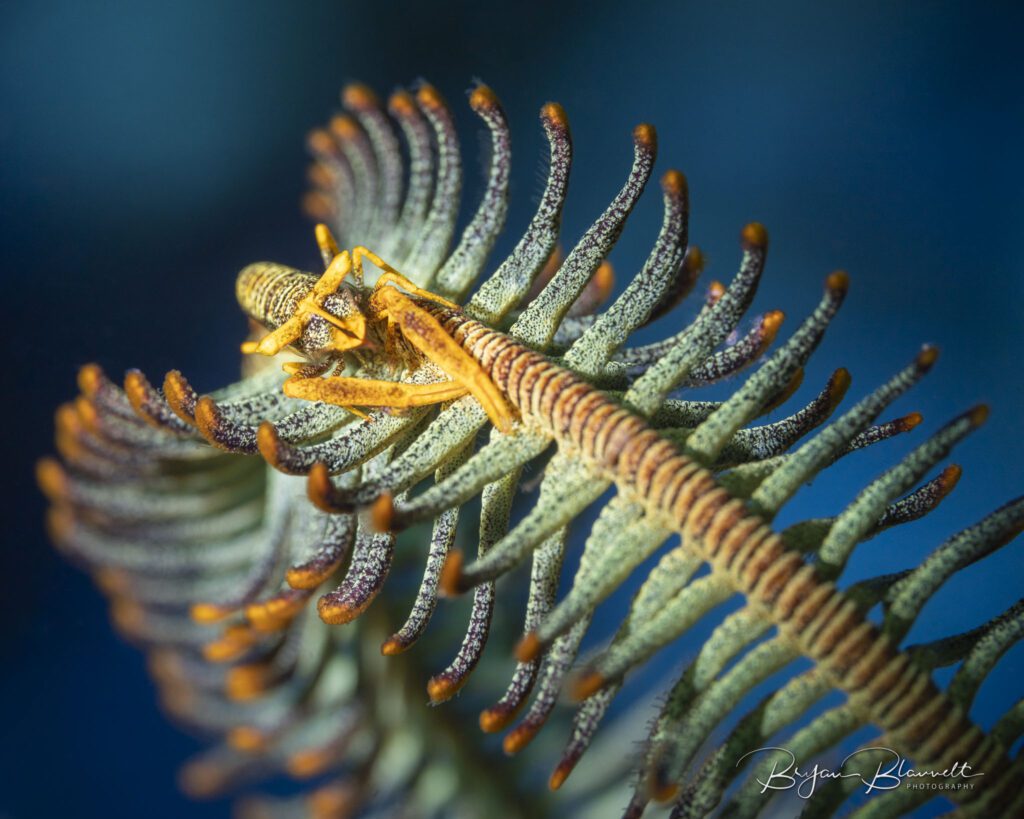
You will improve your results if you identify your potential subject, shoot some initial images of it, and then carefully review what you’ve just shot while you’re still in front of the subject. First, decide if you like the exposure – is the blue too dark or too bright? Do your strobes or video lights create any bright hotspots you could fix? Adjust your camera settings to fix the issues you notice.
Now, look again at your image and decide if you like the composition – is the subject placed in an interesting way in the frame or a less interesting “bullseye” right in the center of the shot? Check the edges and corners of your photo – are there any distracting elements you could take care of by carefully reframing the shot in your viewfinder?
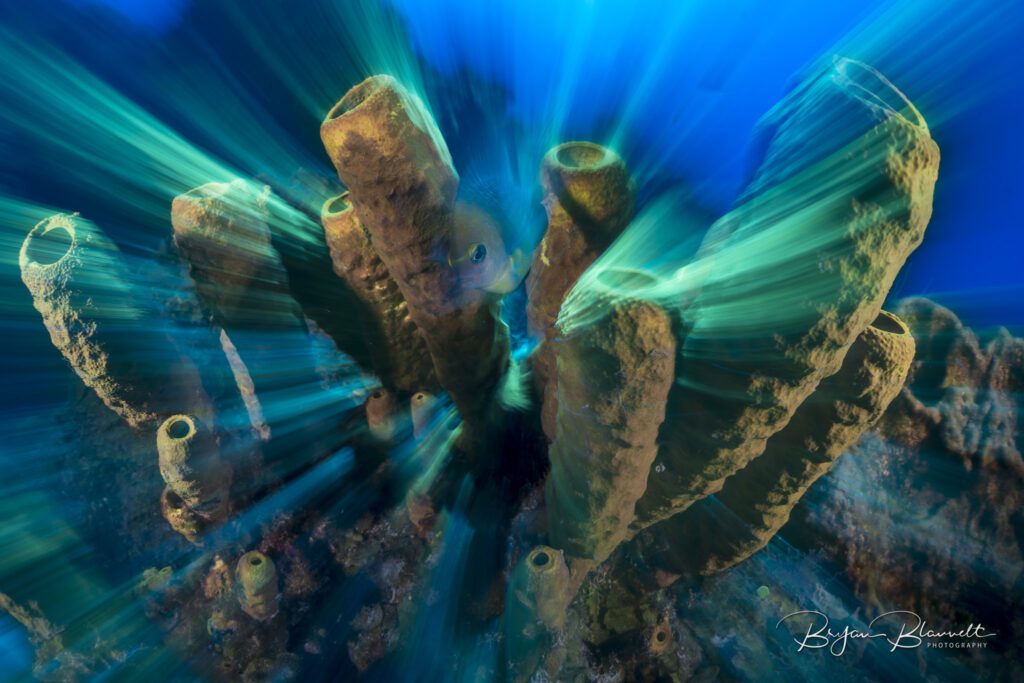
By taking some time to really look at what you are shooting and to dial in the details, you will see a tremendous improvement in the quality of your photos as a new underwater photographer!
What excites you most about being a brand ambassador for Ultralight?
I am thrilled to have a working relationship with a company that produces such high quality products and that listens to customer feedback.
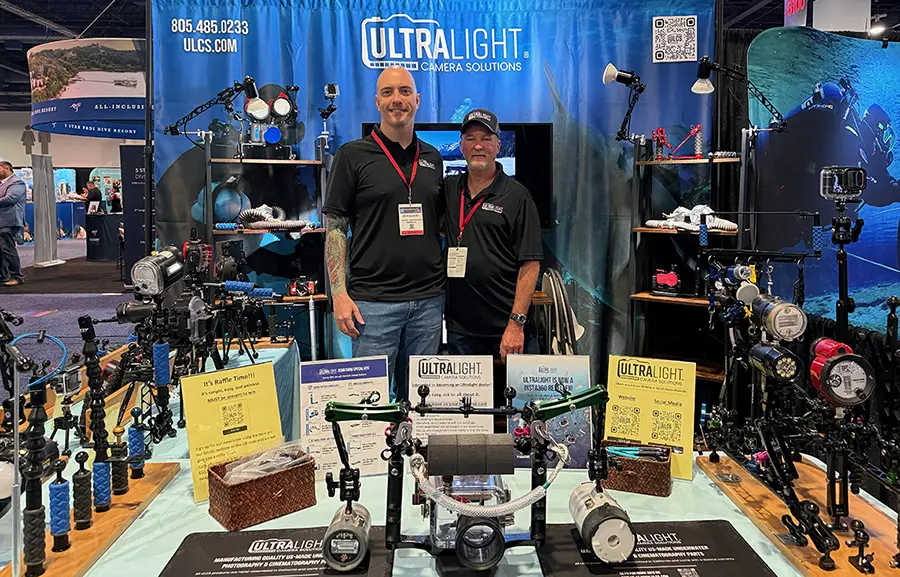
I love the fact that everything is manufactured and assembled in Oxnard, CA by a small team and that every customer and every order means something to Ultralight. I also value the 30-year legacy of craftsmanship and customer service that Ultralight has built over the years. I am proud to partner with a company with these values and I am excited to be part of the ambassador team!
What is your favorite Ultralight gear?
My favorite gear has got to be my long cutout AC-CSLSK2’s and the new 4” quick release! The long cutout clamps are amazing combined with my beefy 90mm Nauticam buoyancy arms… and the quick releases got a bunch of use on my last Anilao trip.
Thank you, Bryan, for taking the time to share more about yourself and your work with us. We definitely picked up a few new things, and I’m sure our customers did too. It’s always great hearing how someone finds their way into a field they love—the wins, the lessons, and everything in between.”
For more information about Bryan, you can find him at Instagram and Facebook.