
At Ultralight, we believe our gear is only as good as the underwater photographer, cinematographer, or camera assistant it supports and no one showcases that better than our Brand Ambassadors. To give you a closer look at their images, stories, and the passion behind their work, we asked each Ambassador a series of thoughtful questions about their backgrounds, favorite rigs, and what inspires their photography and filmmaking. It’s our way of sharing not just how Ultralight gear is used, but also the creativity and spirit of the people who bring it to life.
Please share a little about yourself and the journey that brought you to where you are today.
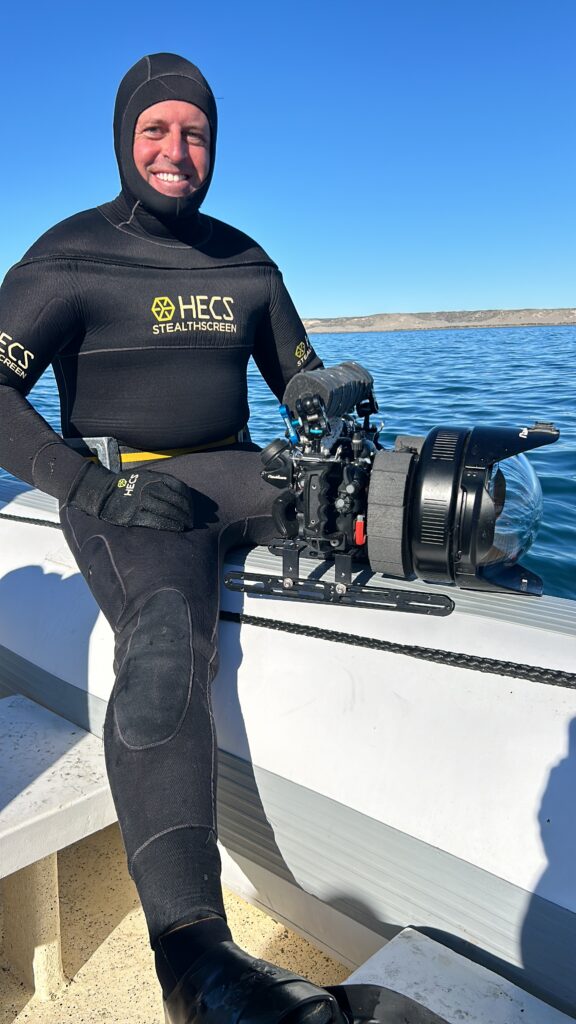
My name is Julian Gunther. I was born in Rio de Janeiro, Brazil, but immigrated to Houston, Texas, as a young child. I grew up splitting time between Rio and Houston, and am equally fluent in English, Portuguese, and Spanish. I have a Bachelor's in Journalism and Zoology from the University of Houston.
What things in life helped you get where you are today?
My parents took me to the Monterey Bay Aquarium when I was about 6 years old, and it changed my life. My mind was blown, everything was so interesting and beautiful, and I immediately wanted to explore more. My parents also took me to other zoos, aquariums, national and state parks, and other wildlife sanctuaries whenever possible. In particular, my father shared his love of nature with me, and he always focused on making it interesting and fun.
What level diver are you and where do you like to dive?
Master/Rescue diver. My favorite dives are all in cold or temperate waters. Some of my favorite dive locations are in Monterey, California, and the outer Channel Islands in Southern California.
How did you get into underwater photography? What sparked your passion?
I picked up my first DSLR as a middle school photographer for my school’s newspaper and yearbook. Somehow, it just made a lot of sense to me, the correlation between shutter speed, ISO, and f-stops. As I got older, I learned more about composition, etc. When I started scuba diving, I wanted to share a lot of the stuff I saw with my friends who didn’t dive, so I started lugging an early GoPro and SeaLife camera whenever possible. I was never satisfied with my images and knew I could do better. Then I saw that famous image from Brian Skerry of the Southern Right Whale and a diver from southern New Zealand, and my mind was blown. I wanted to shoot images like that and knew I wanted to commit to learning and practicing. I got my hands on an old Nikon D60 and housing and started shooting, and after a short while, I noticed my shots were getting better. Now, by comparison, they were still garbage, but I was happy with the progress, so I kept trying. I also started going on paid expeditions to go see specific animals (usually sharks), and I would take advantage to ask as many questions as possible from more experienced photographers. I’d say 99% of them would answer even my dumbest questions and would show/explain their answers. I really have to give a lot of credit to Andy Murch at Big Fish Expeditions and the whole crew at Backscatter in Monterey for indulging me when I was first starting out.
What were some of the biggest challenges you faced when starting out?
Time, money, and patience. Underwater photography equipment isn’t cheap! Also, there wasn’t much good diving in Texas, so I would often have to travel to California, Mexico, or Florida on weekends, requiring additional time and money. Once I started making more friends throughout the industry, it got easier as I could plan further ahead to do the dives/locations that I wanted to do, and also I learned about cyclical patterns of wildlife, so I could more easily time peak seasons for various animals. Patience is still something I battle with. I used to get frustrated with conditions or with not having my camera set up properly before a dive (including settings), but I gradually learned that careful planning can go a long way. For example, now I always set up my camera the night before a dive, with new batteries and everything. I test it once before I go to sleep, then again in the morning to make sure everything is set how I wanted it.
Can you share a memorable moment or experience from your underwater adventures?
One of my first trips to Guadalupe Island (maybe 2008), and I had just purchased my underwater housing for my Nikon D60. I was super excited and figured I was going to come back with National Geographic caliber footage. I spent three days, over 20 hours in the cage, at Guadalupe, and shot over 2,000 photos. I thought they looked great in the LCD. I uploaded them onto my computer and every single photo...every single one...was out of focus. I had left the lens on manual focus. I learned an important lesson on that trip about double-and-triple-checking your gear before a dive, and also that I should upload/backup photos after every day, on multi-day trips.
Another fun experience was at Revillagigedo (maybe 2010). I was diving at a site called “El Canyon”. It wasn’t a particularly interesting dive, we didn’t have any big Mantas, sharks or any other megafauna during the dive, and visibility was ok, not great. As I floated during my safety stop, I just zoned out and stared at my watch as the time ticked down. Suddenly, my dive buddy, who was floating directly in front of me, starts gesturing wildly and pointing behind me. I figured it was a Manta or a shark, but nope, it was a mother Humpback, her calf, and male escort, heading straight for us. They swam right up to us and circled us a few times before going their way. The lesson from that dive was to always be alert, sometimes extraordinary things happen when you least expect them to (which has happened many times since).
What are your favorite locations or dive sites for underwater photography, and why?
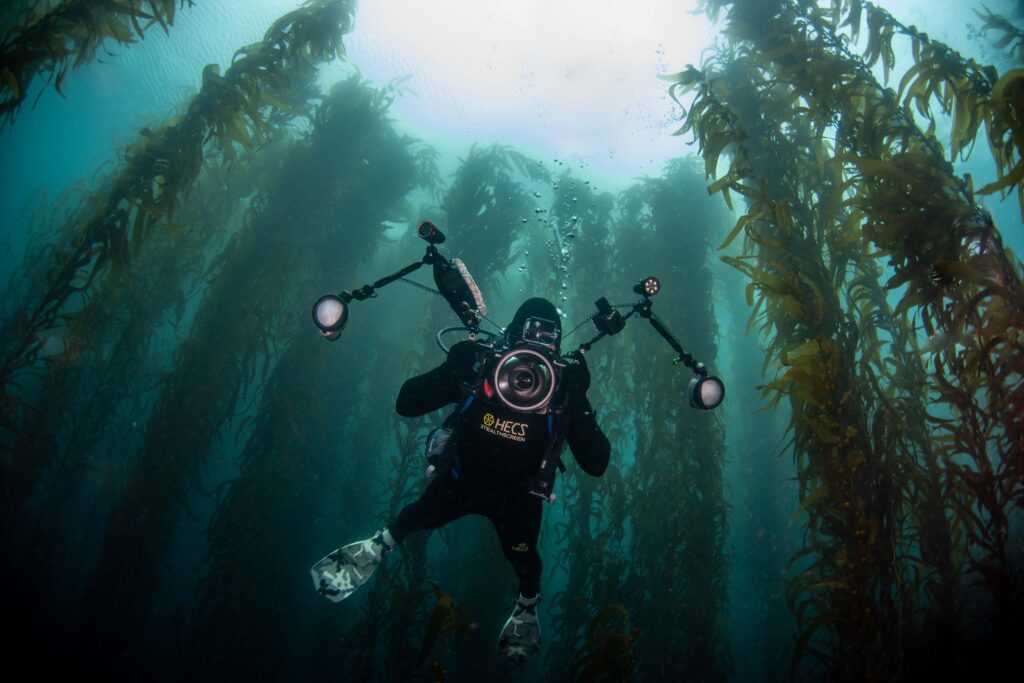
Monterey, California, is very high on my list due to the different sites, the diversity of life, the diversity of underwater environments, and that many of the sites are shore dives, so you can do many different ones in a single day. Monastery Beach in Carmel (just south of Monterey) is extraordinary, but it is highly condition-dependent and can be deceptively dangerous. The payoff though, is amazing from the dense kelp canopy that is populated by Sea Lions and Harbor Seals, to the steep drop at the edge of Carmel Undersea Canyon, where you can literally dangle your legs over the edge. There is always something to photograph at that site, even if it is something as simple as the Blacksmith Fish swimming amongst kelp while illuminated by sun rays. Recently I’ve started exploring a lot in South America and have found some amazing freshwater locations in the Pantanal and Amazon. Crystal-clear rivers full of large fish, caiman, anacondas, capybaras, etc, all swimming among and through fallen trees, foliage, and other vegetation. Looks like something out of early 20th-century adventure films or Indiana Jones movies.

What camera setup do you currently use for underwater photography?
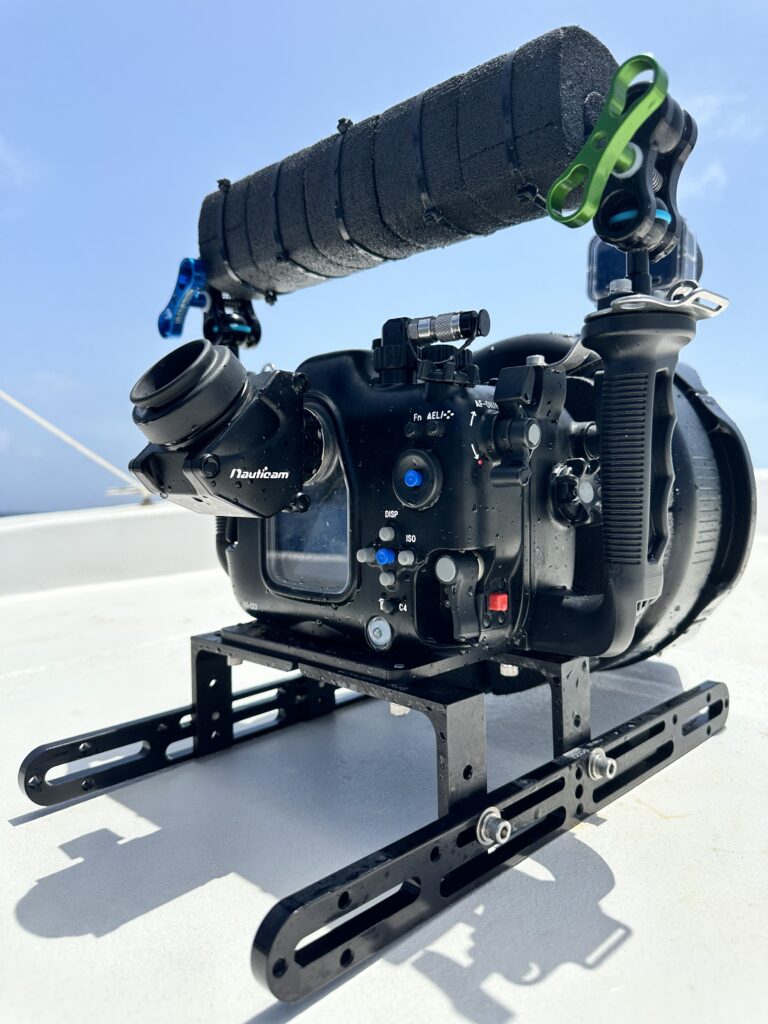
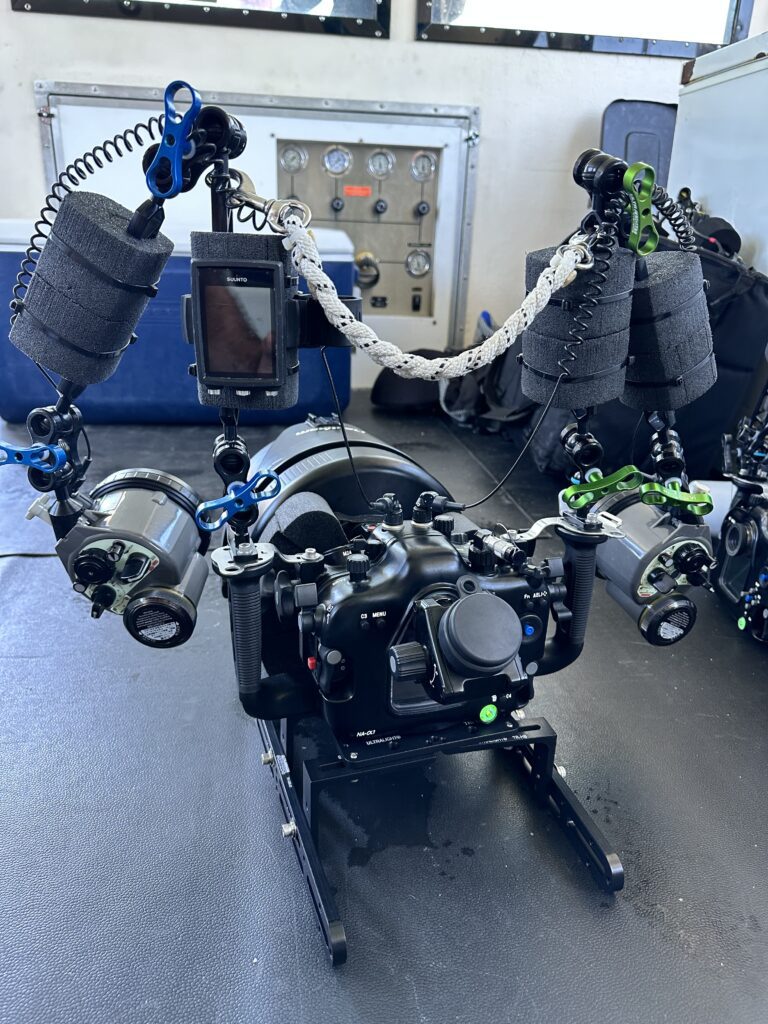
Sony A1 Mirrorless with a Nauticam housing. My go-to lens is the Sony FE 16-35mm f2.8, I usually use that in combination with a Nauticam WACP-2 dome. If I have really clear conditions, I may also use a Sony FE 14mm f1.8 lens, with that same dome. On occasion, I will throw on an adapter and also use a Canon 8-15mm fisheye.
What type of underwater photography do you prefer and why?
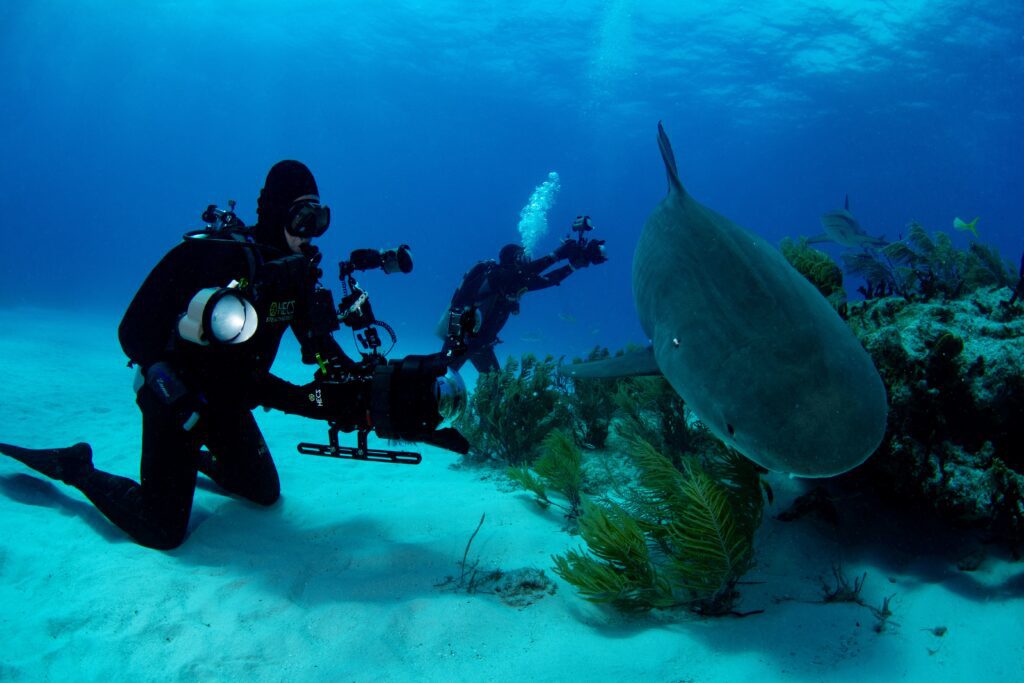
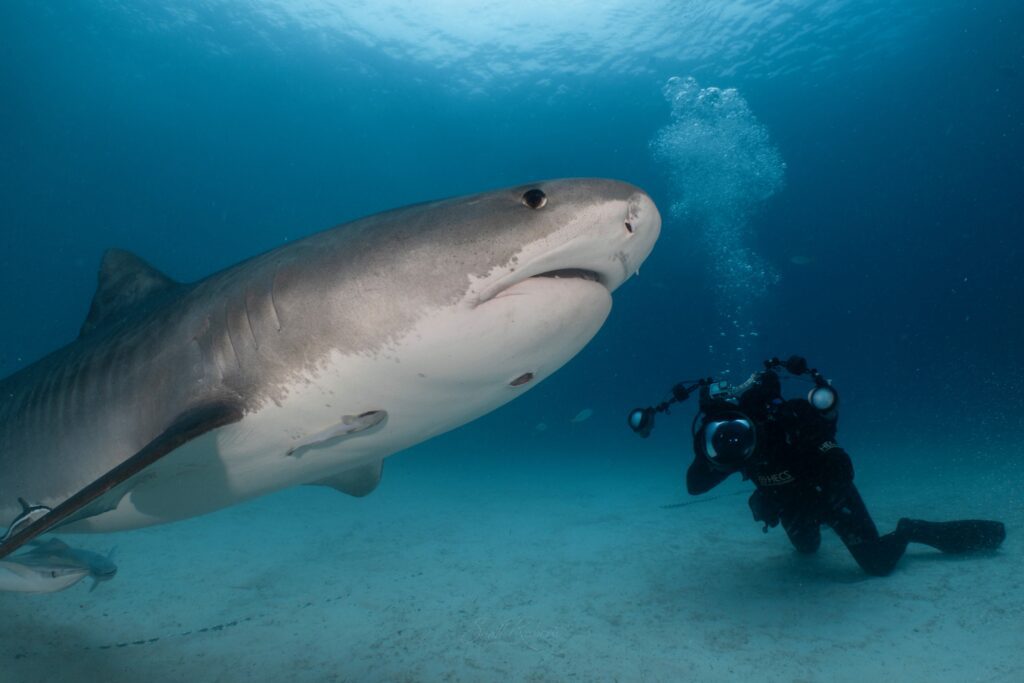
I alternate between close-focus wide-angle (CFWA) and just regular wide-angle. I love CFWA if you can get a large subject (like a whale or shark) in very closely and have them looking directly at the camera. I just think it brings out something extra about the subject, you get the idea that it is more than just large and that something is behind its size, its thinking, and rationalizing. However, shooting animals that large from that close requires a bit of stable nerves and confidence. I can tell you from experience, it can be a bit disconcerting to have a 50+ ton whale looking directly at you from only a couple of feet away. Not that the whale would mean to do you harm, but if it moves suddenly or takes greater interest in you, you’ve got to be prepared to move fast.
Do you prefer artificial or natural light and why?
I prefer artificial lighting because it can control the illumination, and I don’t have to worry as much about my positioning in relation to the sun. Plus, I can focus on illuminating the subject fully. However, that said, I am often forced to shoot my subjects using ambient light so as not to disturb them or due to local regulations/permits. That is challenging because you not only have to focus on getting the subject composed how I would like, but often times I’m also moving to keep the sun in the position thats most beneficial for shooting...and often the wildlife may not feel like cooperating, so we play a game of cat-and-mouse where the animal goes where it chooses and I try to keep the sun in the best position possible.
Do you have any favorite techniques for that you can share?
Always get closer. Always. Now the disclaimer is, get as close as is SAFE. I can’t tell you how many times I’ve been shooting an animal and I keep trying to get closer and closer, and then when I review my photos later, inevitably it's the last one in the sequence that is usually the best (since it's the closest). So again, get as close as possible while being safe.
How do you stay updated on the latest techniques and technologies in underwater cinematography?
I read a lot on Wetpixel/Waterpixel, there are a lot of great informative videos on YouTube and ask questions. If you see an interesting photo on social media, send the photographer a message asking questions. If it's from a store or business, send them a message too. Most people are happy to answer and engage. If you see an interesting photo in print or media, same, find the photographer on social media and send them a note, see what they say. As they used to say in those old Saturday morning PSA’s “reading is power”.
What’s your favorite piece of gear from Ultralight and why?
I love my colored clamps and arms, but the game changer for me is my ULCS Large Underwater Camera Sled Tray Kit – CSK SLDL. That thing is a game-changer. I often use comically large domes, and my camera would rock on boats, and the underside of my domes would get scratched up. I first used the camera sled kit at Tiger Beach, and it was amazing. I could rest my camera on the boat without it rocking or getting scratched. Since then, I have packed it on every single trip I’ve been on.
What inspires your underwater photography?
I’m fascinated by non-traditional and lesser-photographed animals. Everyone has seen amazing photographs of Humpback Whales, Dolphins, etc, but how many amazing photos exist of Greenland Sharks (one I’m hoping to capture), Anacondas, Freshwater Stingrays, etc. All these animals inhabit fascinating environments and are as interesting as any other, more commonly photographed organism. Admittedly, many of these “non-traditional” animals inhabit areas that aren’t as easily accessible, but I believe that if we can provide captivating photos/videos of them, then the general public will be more interested in them, and that will help promote further conservation.
How do you approach composition underwater, considering movement and marine life behavior?
I try to think of how to bring in light and the whole environment into play. I’ve gotten bored with photos that just have a subject and blue/green water. I try to figure out how it could be possible to shoot a Sea Lion, swimming through kelp with the sun’s rays coming through the canopy...or a whale swimming across the seafloor with the surface shimmering above it. I consider the environment that I will be shooting in (shallow water, river, etc) and how to still have the animal as the main focus of the shot, but also bringing in the surrounding environment to add background/backstory to the shot.
What’s your favorite type of marine subject to photograph, and why?
Tough one, but right now it would either be Blue Sharks or Southern Right Whales. I love the serpentine swimming nature of Blue Sharks, coupled with how the light changes across their skin’s surface. You can get hues of green, blue, aquamarine, orange, and all kinds of other colors you wouldn’t expect. It also doesn’t hurt that they are very deliberate and will swim right up to you. With regards to the Southern Right Whales, I’ve been fortunate to lead professionals on trips to Patagonia for the past several years and shoot them, under government permit. The whales are very sociable and large, very large. Again, they inhabit cold water that often has poor visibility, so if you can get clean shots of them, it is exceptionally rewarding. In addition, their conservation and recovery is an amazing story that I never get tired of sharing.
Have you ever encountered any unexpected or dangerous situations while underwater?
I think we’ve all had a few encounters that I’ve felt less-than-comfortable in, but I keep those mainly to myself. Also, I didn’t force this issue. Once I realized behavior was changing and I wasn’t comfortable, I simply exited the water. If you learn about animals’ behavior, how you should react, and how to read an animal's body language, you can generally avoid potentially uncomfortable scenarios before they happen.
What challenges do you face as an underwater cinematographer, and how do you overcome them?
There are two types of challenges, those you can control and those you can’t. Wave/offshore conditions and visibility are examples of those you can’t control. In the case of wave/offshore conditions, all you can really do is try and build in a buffer. So on some shoots, we throw in an additional 2-3 days on top of what we expect, so we can hopefully get our full time on the water. If it works out that conditions are great the entire time, we have even more opportunities to “get the shot.” Challenges we can control are things like gear setup. As I said previously, I like to set up my gear the night before, so I can make sure everything is working. I can check everything is sealed properly, I can make sure I put batteries in, I put memory cards in, I took the lens cap off, strobes are firing properly, camera settings can be adjusted and the knobs are all working and in sync, etc...by the way, everything I just listed, I’ve either forgotten or had issues with when I was more novice and didn’t realize until I was many feet below the surface. A long, long time ago, I had a school of about 200 Hammerheads swim past me, and that was also when I realized I’d forgotten to insert a memory card! That also goes for dive gear. Connect your regulator to your tank the night before to make sure the tank has air and the regulator is providing air. It’ll take about 30 seconds to do and will save you a lot of hassle if you suddenly realize your tank is half empty or you need an O-ring. If you’re diving early in the morning, the last thing you want to do is search for an O-ring or tank refill while a Giant Pacific Manta has shown up unexpectedly.
Do you use your photography to promote ocean conservation? If so, how?
I do. I supply photos and videos, free of charge to local researchers and give them permission to use them for either research or fundraising purposes. I know how difficult it is for many scientists to secure funding, so I’m happy to help them with anything that can be done to secure fundraising or in the production of their educational materials. In addition, a lot of times I am a guest in their geographic areas, so its the least I can do to thank them for allowing me to share in the research environments.
Are there any conservation projects or initiatives you’re passionate about?
The Southern Right Whale protections in South America. The ICB (Instituto Conservacion de Ballenas) in Argentina is doing an incredible job with Southern Right Whales in Argentina. They work in conjunction with, and often together with, the local populace to keep track of the local whales.
How do you think underwater photography can contribute to marine conservation efforts?
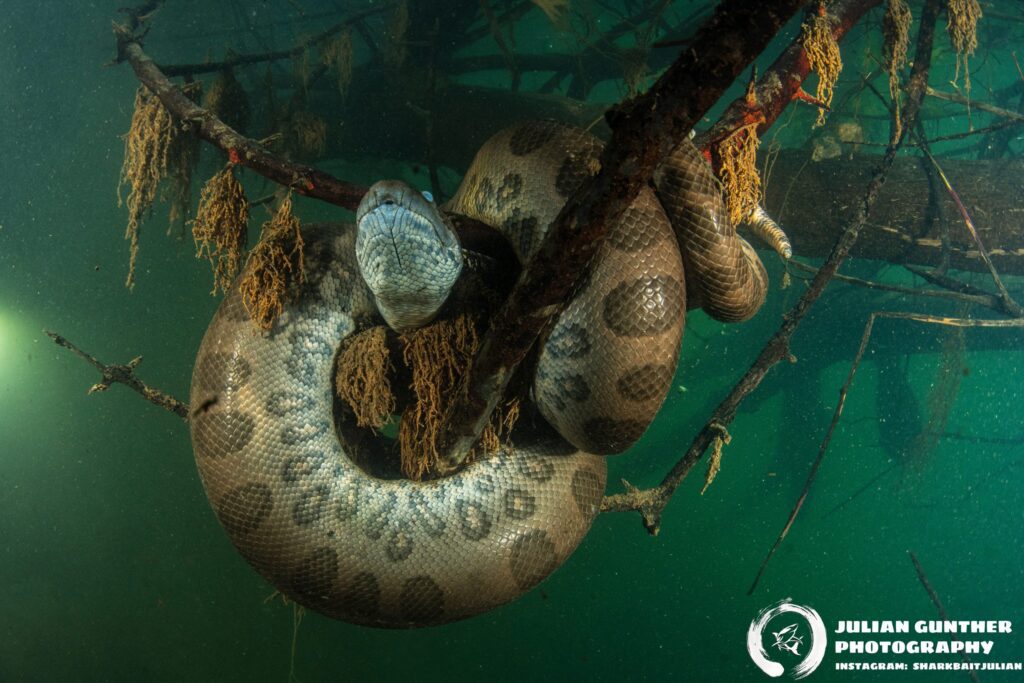
Not everyone has the time, money, opportunity, physical capacity, etc, to go out and see animals in their wild environment. It's not easy. Believe me, I know all about being weathered-out, having no-shows, crap conditions, etc...but if I can come back with one (or hopefully more) good shots or an animal in its environment, then perhaps it shows people that there is more to the ocean (and rivers) than just coral reefs and everything deserves protection. A couple of years ago, I took a photo of an Anaconda that went viral, and I was very proud. Here is a photo of a giant snake, which typically instills fear, and the reactions were overwhelmingly positive...and it helped not only to show that “non-traditional” animals can also be interesting, but also to promote conservation and interest in less commonly-known environments, in this case, the South American Pantanal.
What’s the best piece of advice you’d give to someone just starting out?
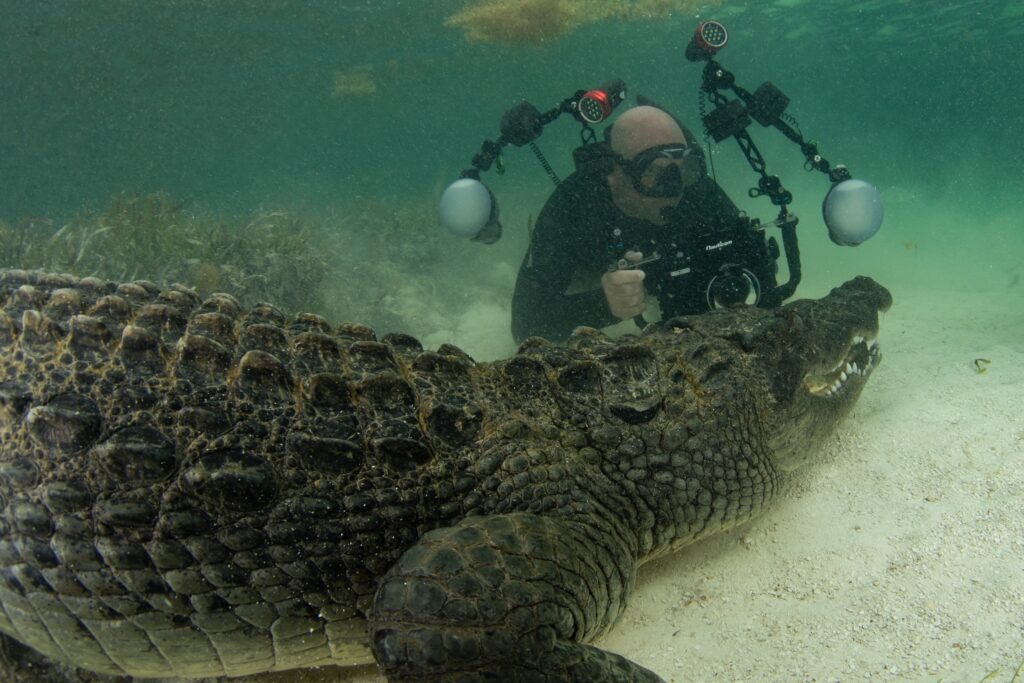
The gear is less important than the person using it. If you can’t afford the top-of-the-line camera, don’t worry about it; get what best suits your price range. It's like driving, just because you can afford an F1 race car, doesn’t mean you’ll be able to drive it like an F1-caliber driver. Get a camera and shoot, and shoot often. Shoot in your backyard, local park, wherever. Learn to adjust settings by practicing. I still take my camera to local state parks whenever I have free time. Even though I like to think I know how to operate my camera pretty well, it still doesn’t hurt to go and practice. Plus, you can try different settings in a low-stress environment. Believe me, it’ll pay dividends if/when you are on a later shoot and clouds roll in, and you already have muscle memory to instantly change your settings. In addition, I think people often underestimate the shots you can get of local creatures. I had a shot of an American Alligator that ran in National Geographic online, which I took about 40 minutes from my house, on a random Thursday, when I decided to go to Brazos Bend State Park. A camera is a tool, like a hammer or drill. You need to learn how it functions before you can expect to use it properly.
What are common mistakes new underwater photographers make, and how can they avoid them?
Spending all their energy towards purchasing the best equipment that money can buy, and not about learning or educating themselves about the photographic process. I can’t tell you how many times I’ve had people ask for advice and they’ve shown me their professional-level gear, and all the settings are off or they have the wrong lens, etc I’m not saying to buy inferior gear, but I am saying don’t overdo your budget. Underwater photography is expensive, and it takes a lot of time, effort and patience to learn. No one gets good at it in a year, or even two. I’ve been doing it for almost 15 years now and still feel I have A LOT to learn. Do a lot of research before purchasing gear, you’ll save a lot of headaches and money.
Any recommended resources (books, courses, workshops) for learning underwater cinematography?
Youtube. Amidst all the nonsense on social media, there are a lot of surprisingly good tutorials on YouTube, and in particular, I love that you can stop them and replay the parts you might need a little more help with. To this day, I still go on YouTube on a regular basis to see if I can’t find an answer to a question or if I’m trying to customize gear. In particular, GoAskErin has some amazing free and paid photo editing tutorials, and the crew at Backscatter also has a lot of excellent, free content. Otherwise, I’d recommend going to YouTube and searching for your camera model and any questions you may have. You’d be amazed at what comes up. Also, if you are on a boat dive and see someone else with a camera and you have questions, try asking them. I still do it sometimes, and if people ask me, I’m happy to help. You’d be amazed at how welcoming most high-level and pro shooters can be. Most want you to be able to go home with a shot/video that you are happy with, and will be willing to show you some settings and tricks.
What’s next for you in your photography journey? Any exciting projects or goals?
This year I’ll be spending a lot of time down in South America. I’ll be spending time in the Amazon, the Pantanal, and in Patagonia shooting a lot of different wildlife. I think that South America is often overlooked and has many interesting environments and fascinating animals, so I’m happy that a lot of my travels will focus on there for the foreseeable future. I’m also hoping to finalize some trips to shoot Greenland Sharks and/or Snow Leopards, but there are some time constraints involved with those, so they may be a little further off (I hope not, though).
What does being an Ultralight brand ambassador mean to you?
I appreciate being able to represent a product that I had already purchased and have used for years. I have ULCS products that I purchased over 10 years ago that I still use on a regular basis. My dad always told me to not go cheap on your tools and get the best quality, and I think ULCS is exactly that. So when someone asks me about my gear, I can tell them about ULCS authentically and from the position as an ambassador and a regular customer.
How did your partnership with Ultralight come about?
I reached out to ULCS, and Ken immediately got back to me. I felt kind of bad because I didn’t think the response was going to be that quick, and I think I was going on a three-week expedition to South America the very next day! We had a series of calls after I got back, and here we are!
Has working with Ultralight influenced your underwater photography?
It's funny because I’ve never really shared my gear, my setup, or anything, but I do it now more often, and the response is overwhelmingly positive. I never realized how many people were curious about different setups and customization.
What excites you most about being a brand ambassador for this company?
I love that ULCS asks for feedback and ideas for gear. I’ve had some things that I wanted to adapt to my setup, and Ken and I discussed it, and he gave some very interesting feedback, which I had not considered. I’m looking forward to discovering new problems and seeing what kind of interesting solutions that ULCS can come up with, haha.
Has working with Ultralight influenced your workflow and creative process?
It's definitely lessened my headaches and concerns about my gear. A prime example is the UCLS Camera Sled, which I mentioned previously. I viewed the scratches to my dome’s shade as a necessary evil that just comes with the territory, but ULCS showed me that they could all be avoided with the sled. They’ve also shown me different lighting setup options that I wished were possible but had never considered feasible.
What unique features of Ultralight do you find most valuable?
Quality and durability, without hesitation. A friend of mine bought some knock-off clamps and arms, and they bent after the first or second use (I’m not exaggerating). Again, I’ve got some ULCS products that are approaching 15 years old, and I don’t recall ever having to throw anything away for breaking or anything. Solid quality.
Can you share a project where this gear significantly impacted your work?
Patagonia, Bahamas, California...and that’s just in the past 12 months. All three had days with surgy conditions, and the sled held my gear steady on the boat without rocking and rolling. Also, I love the ULCS triple clamp (AC-TCS). We did night dives in both the Bahamas and California, and that allowed me to mount red focus lights on my arms, so that I could turn off all my lights and let the animals come in close, while allowing me to both watch their approach and ensure my camera had ample light to focus before I depressed the shutter button.
Do you get to test or provide feedback on new gear before it’s released?
Unfortunately, I haven’t taken advantage of that benefit yet, but I fully intend to!
• What advice do you have for photographers who want to work with brands?
Go with a brand you would use regardless of it you did or did not have a partnership. Don’t go with whatever immediately comes around. You’ll appreciate it more when it's something you actually use and can vouch for, plus your recommendation will be genuine. Anthony Bourdain had a fantastic quote about how he chose who to partner with: “What’s good for you in the short run is not necessarily good for you in the long run. You’re starting out as a writer, you’ve written one book and a TV show, and then somebody offers you a million dollars to represent an anti-diarrhea medication. That’s a lot of money in a short run, but you’re always that guy with the shits.”
Thank you, Julian, for taking the time to share more about yourself and your work with us. We definitely picked up a few new things, and I’m sure our customers did too. It’s always great hearing how someone finds their way into a field they love—the wins, the lessons, and everything in between.”
For more information about Julian, you can find him at his website, Julian Gunther Photography, and Instagram.