
At Ultralight, we believe our gear is only as good as the underwater photographer, cinematographer, or camera assistant it supports and no one showcases that better than our Brand Ambassadors. To give you a closer look at their images, stories, and the passion behind their work, we asked each Ambassador a series of thoughtful questions about their backgrounds, favorite rigs, and what inspires their photography and filmmaking. It’s our way of sharing not just how Ultralight gear is used, but also the creativity and spirit of the people who bring it to life.
Please share a little about yourself and the journey that brought you to where you are today.
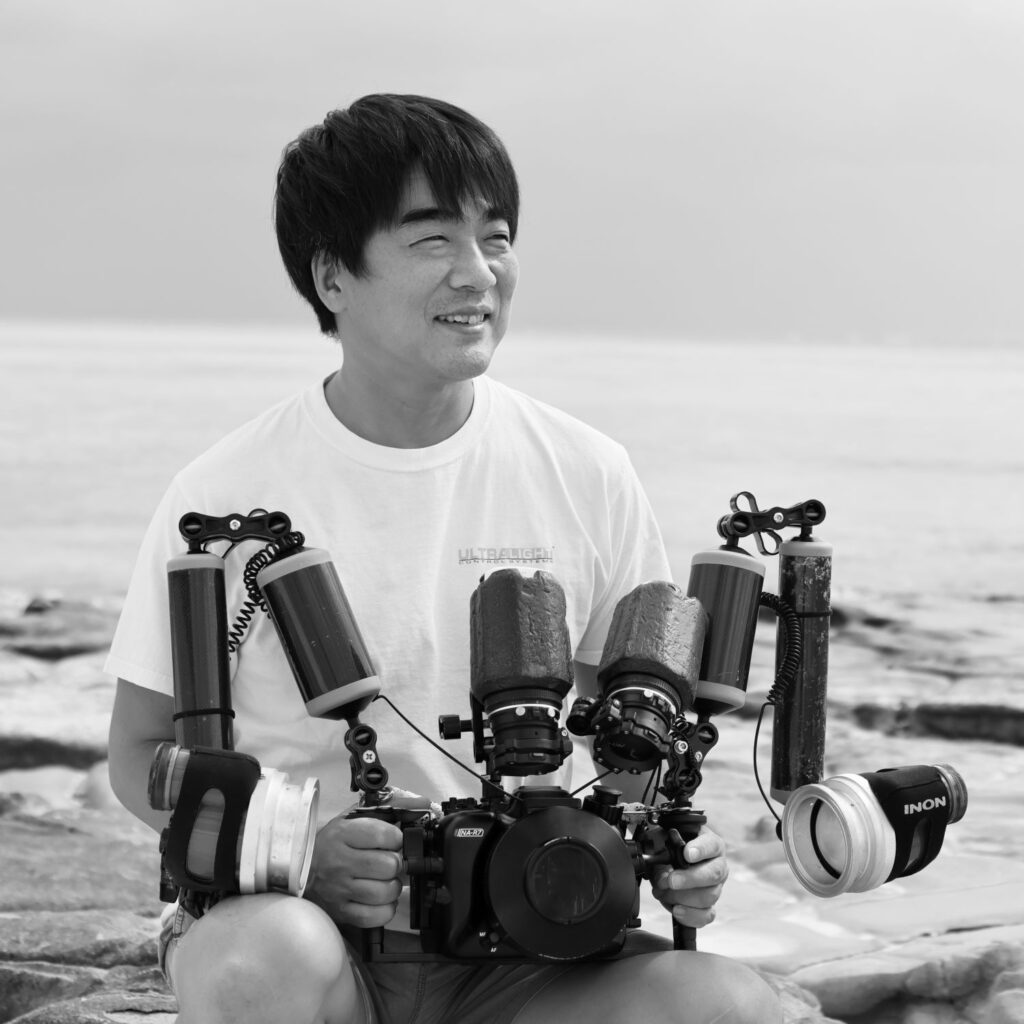
Hi, I am Ryo Minemizu from Osaka Japan. From 1990 to 1997, I worked as a diving guide in Ōsezaki, diving almost every day and completing around 800 dives per year.
What level diver are you and where do you like to dive?
I am a NAUI Instructor and really like diving in Kume Island, Okinawa, Osezaki Shizuoka, JAPAN, and West Palm Beach, Florida, USA
How did you get into underwater photography? What sparked your passion?
Soon after I began diving, I wanted to learn what the creatures I encountered were, and I felt compelled to document their beauty through underwater photography so that others could appreciate them as well. My first attempt was with a Fujifilm disposable camera placed inside a waterproof case. However, the results were far from what I had imagined. I then tried using a Nikonos V camera that was available at my workplace, but achieving proper focus and exposure proved difficult, and I still wasn’t satisfied with the outcome. Around the time I decided to take underwater photography more seriously, I was fortunate to meet someone who kindly lent me an SLR camera and housing made by Aquatica. Diving and photographing with that setup was a turning point, it made me realize that I wanted my own equipment. That experience led me to purchase my first Nexus housing, marking the true beginning of my journey as an underwater photographer.
What were some of the biggest challenges you faced when starting out?
When I started underwater photography around 1990, it was still the era of film cameras. It’s hard to imagine now, but underwater photography was limited to a maximum of 36 shots per roll of film, so I remember setting my own rule for how many shots I could take of a single subject and pressing the shutter carefully one by one. Of course, since it was a film camera, I couldn’t see the results until the film was developed. It took about an hour by car to get to the nearest photo shop, and even if I asked for reversal film processing, the fastest turnaround was about a week. So it usually took about ten days from shooting to actually being able to see the photos. I also remember very well that, as I was still young at the time, most of my salary was quickly spent on film and developing costs every time.
Can you share a memorable moment or experience from your underwater adventures?
I have dived into the ocean countless times, and every experience has been irreplaceable—from encountering mysterious larval fish drifting in the darkness of the midnight sea to meeting a friendly minke whale that approaches and looks straight into my eyes. Every dive brings new discoveries and emotions, and the ocean never shows the same expression twice. In those moments, I feel the cycle of life and the preciousness of existence not through words, but deep within my heart.
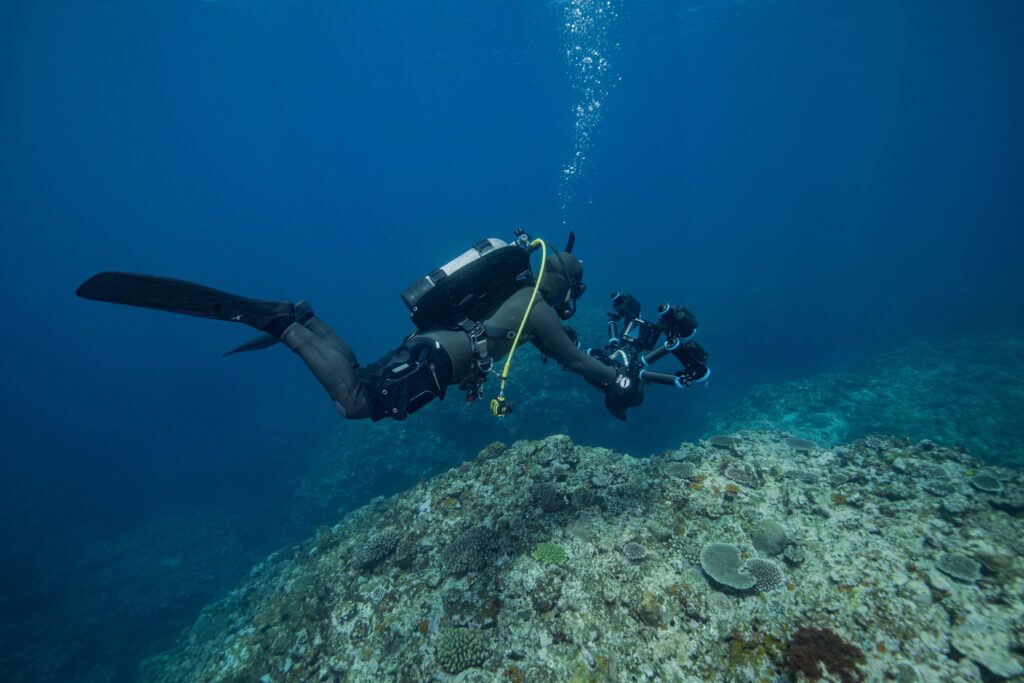
For me, the ocean is not only a place to search for unknown creatures, but also a place that teaches the beauty and fragility of life. Capturing and sharing those fleeting moments through my camera is what I believe to be my life’s true purpose.
What are your favorite locations or dive sites for underwater videography, and why?
My favorite seas are the waters around Japan. Surrounded by the ocean on all sides, Japan is an island nation stretching approximately 3,000 kilometers from Hokkaido in the north to Okinawa in the south. In winter, you can dive beneath drifting ice off the Shiretoko Peninsula in Hokkaido, while in subtropical Okinawa, vibrant coral reefs extend across the seafloor. Japan also has four distinct seasons, bringing remarkable changes to the underwater environment throughout the year. This diversity allows for an incredible variety of diving experiences within a single country.
What camera setup do you currently use for underwater photography?
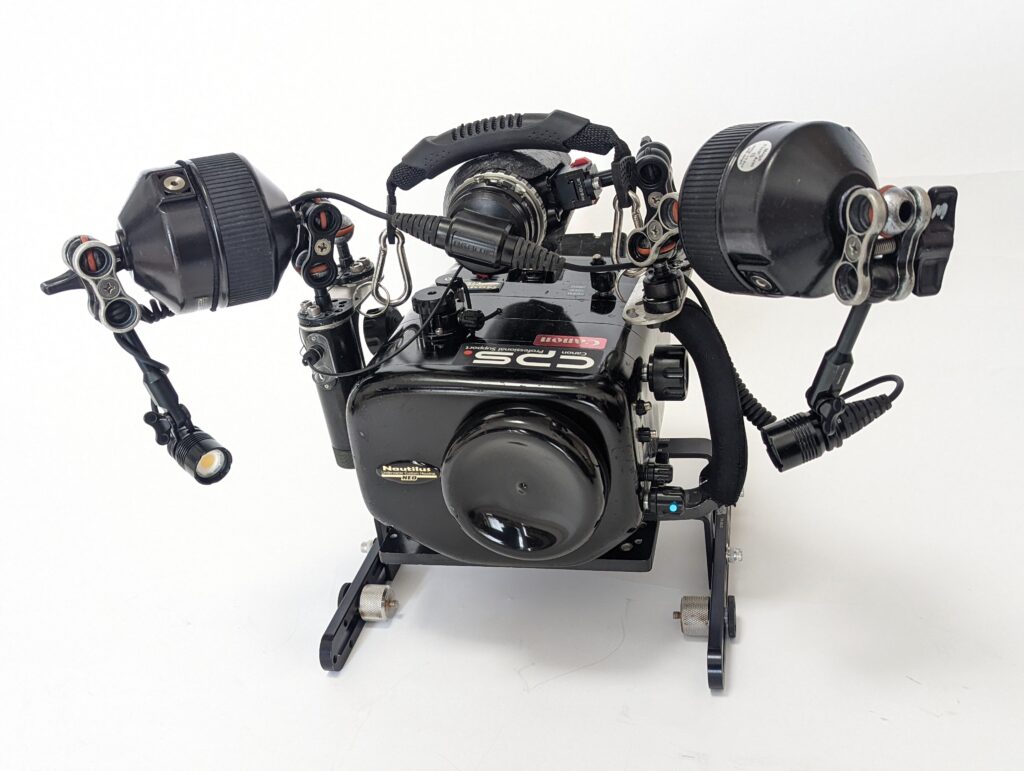
I have three cameras I like to use, and the complete setups are below.
CAMERA 1 varies depending on what I am doing
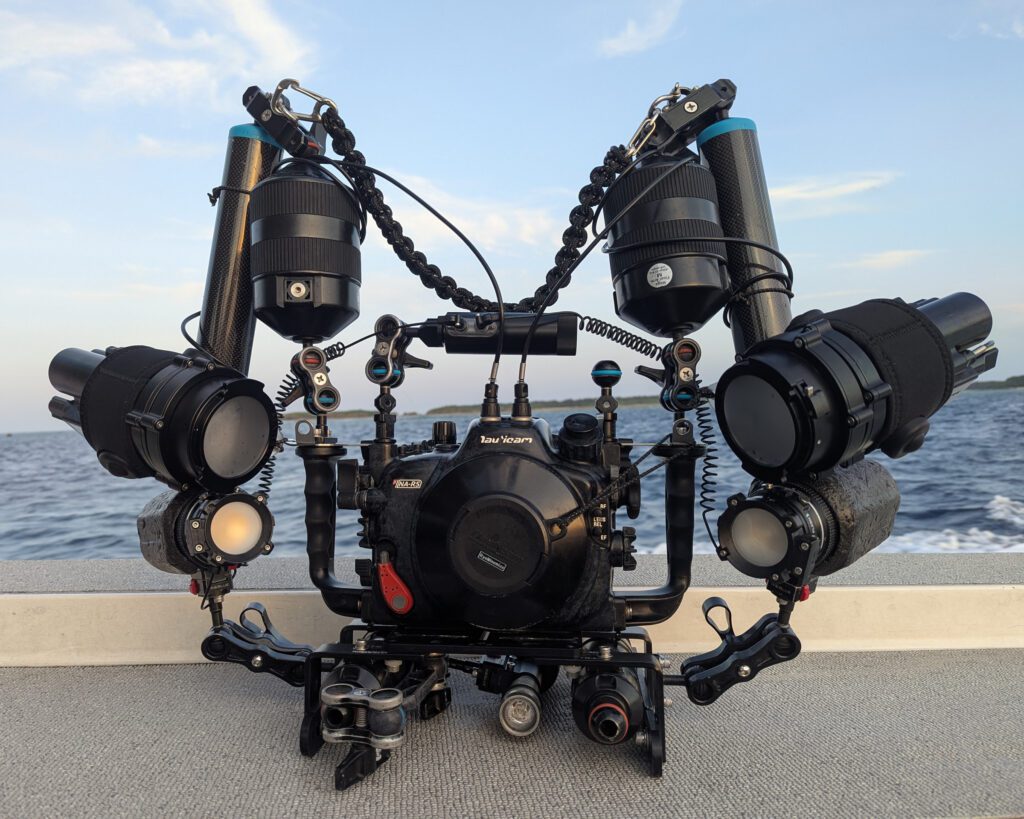
CAMERA 2
CAMERA 3
Do you prefer macro or wide-angle photography and why?
I like both wide-angle and macro photography. The reason is that macro photography allows me to capture the charm and details of each subject, while wide-angle photography enables me to convey the entire landscape and its atmosphere. I believe both are essential for photographic and video expression.
Do you prefer strobes or natural light and why?
In shallow waters less than 10 meters deep, where sunlight reaches, I enjoy capturing images that make use of natural light and express its beauty. On the other hand, in deeper areas, using strobes in most cases allows for a more faithful reproduction of a subject’s true colors. With the advent of digital photography, post-processing has become far more versatile, making it possible to photograph light-sensitive organisms using continuous lights or natural light and later restore their colors during editing.
Do you have any favorite settings or techniques for capturing sharp, vibrant underwater images that you can share?
To capture clear and vividly colored underwater photographs, it is essential to get as close to the subject as possible. By minimizing the distance between the subject and the camera, you can reduce the effects of suspended particles and water coloration. In addition, accurate color reproduction depends on matching the strobe’s light color with the camera’s color temperature. The key is to know the color temperature of your strobes and adjust the camera’s settings accordingly.
How do you stay updated on the latest techniques and technologies in underwater photography?
I regularly follow the manufacturers’ websites and social media accounts to stay updated on the latest equipment.
What’s your favorite piece of gear from Ultralight and why?
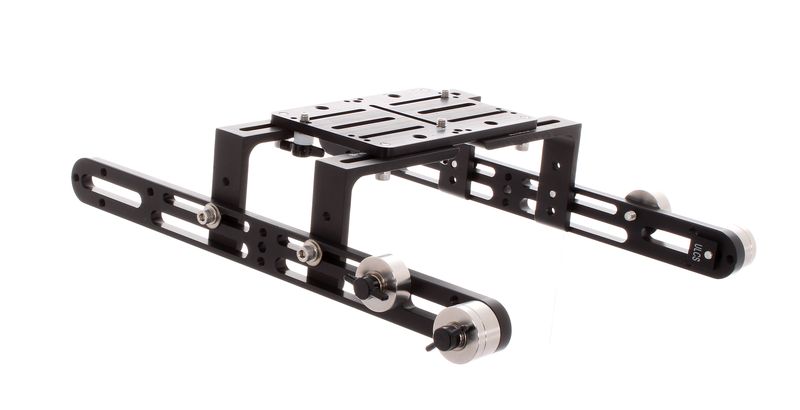
Ultralight offers a wide range of cleverly designed camera accessories. For example, when I want to position a strobe in a specific spot, I can always find the perfect part for that setup from Ultralight. My favorite piece of equipment is the TRI-TRAY Universal Camera Tray and Sled/Skid Kit. For example, it keeps the camera stable even on a rocking boat, preventing it from tipping over. It also allows me to add a variety of accessories depending on how I configure it.
What inspires your underwater photography? Do you have a specific theme or style?
What I most want to convey is the brilliance of life. It means that every living creature, no matter how small or overlooked, has equal value. Even those that few people ever notice are deeply connected to one another and constantly strive to maintain balance in their world. Nature is truly magnificent, and there is little room for human interference. By learning about their existence and the way they live, we gain countless insights and lessons from them.
How do you approach composition underwater, considering movement and marine life behavior?
When composing a shot underwater, I first make an instant decision about which part of the subject I want to capture the moment I encounter it. If the subject is moving, it is important to read its behavior and sense what it might do next. Of course, this does not always go perfectly, but by observing the situation the subject is experiencing, I try to anticipate its next movement and adjust my composition instantly while shooting.
What’s your favorite type of marine subject to photograph, and why?
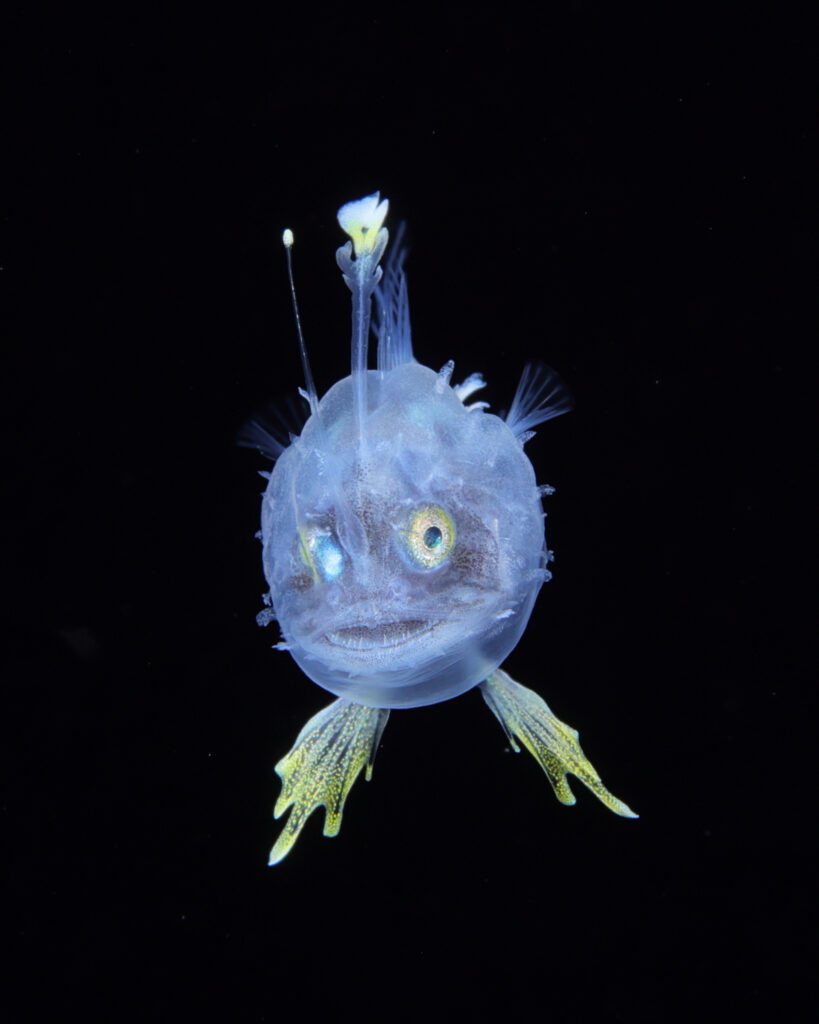
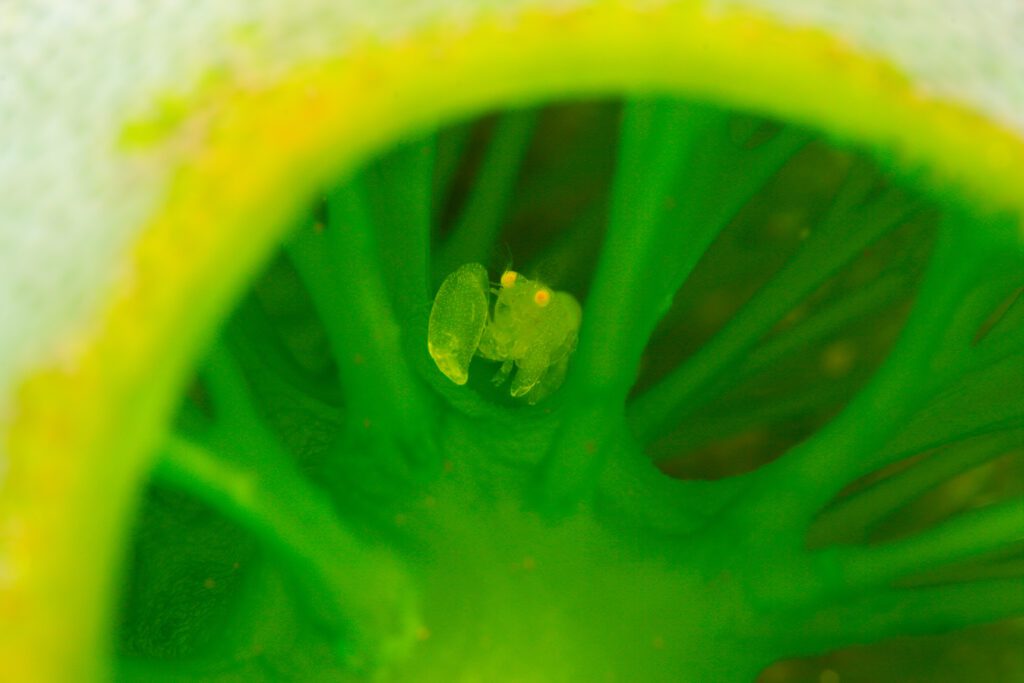
For the past quarter of a century, I have been deeply engaged in photographing planktonic life. I have focused on documenting larval fishes and invertebrate larvae, many of which have forms that no one has ever seen before, as well as gelatinous organisms such as jellyfish and the hidden relationships among planktonic species. Through this work, I have helped uncover many mysteries of marine life, but what has been revealed so far is only a small part of what remains unknown. There are still countless discoveries and opportunities ahead. Every time I enter the ocean, the anticipation of encountering an unknown creature or witnessing a never-before-seen moment is immense. It could even lead to a discovery of great scientific significance.
Have you ever encountered any unexpected or dangerous situations while doing your photography underwater?
About thirty years ago, it was still a time when weather forecasts could not predict conditions only a few hours ahead. While on assignment at the Shiretoko Peninsula in Hokkaido, I went beach diving with a local guide. After about forty minutes underwater, I tried to exit, only to find that the sea had turned extremely rough and the coastline had completely disappeared from view. The only place to get out was the rocky area where we had entered, so I had no choice but to brace myself and move through the raging waves. At that moment, I was engulfed by a massive wave and thrown violently against the rocks. The port of my Trieste camera housing broke in half, and both my regulator and mask were ripped away. Struggling helplessly in a cloud of white bubbles, unable to breathe, I was suddenly struck by another powerful wave that threw me onto the rocks. As soon as I managed to draw a breath, I realized that I had somehow survived. In that moment, I truly thought my life was over. Since that experience, I have never left weather judgment to others. I have learned to recognize even the slightest changes in weather myself, make careful predictions, and plan every dive with safety as the top priority. At that time, as a young photographer just starting out, the physical pain was nothing compared to the heartbreak of seeing my housing destroyed beyond repair and my camera flooded.
What challenges do you face as an underwater photographer, and how do you overcome them?
Since the advent of digital cameras, underwater photography has become much easier than before. With a large-capacity memory card, the number of photos you can take underwater is practically unlimited, and you can check your images immediately after shooting. As a result, underwater photography has become far more accessible. Today, even amateur photographers can easily obtain high-performance cameras and capture beautiful images, leading to an era where underwater photos are everywhere. In addition, new photo-selling platforms have emerged, allowing amateurs to earn small amounts of money, and these sites are now flooded with royalty-free images. Consequently, the value of rights-managed works like those we create is being threatened. In reality, the cost of underwater photography, including diving and equipment expenses, is several times higher than that of shooting on land, yet the market price for underwater images remains the same. This situation is truly unreasonable. In other words, photographers can no longer make a living by producing underwater images that anyone can take. For this reason, underwater photographers must now strive to create images and expressions that do not yet exist in the world. While location and technique are important, social media trends clearly show that the demand for video will continue to grow far beyond that for still images.
Do you use your photography to promote ocean conservation? If so, how?
I am particularly focused on the issue of marine plastic pollution. I include related photographs in magazine features and engage in awareness-raising activities through radio appearances, lectures at schools, and gallery talks at my photo exhibitions.
Are there any conservation projects or initiatives you’re passionate about?
The conservation effort I am most passionate about is beach cleanups. Whenever I travel to Okinawa for photography, I always visit a nearby beach and clean it by myself. Each time, I see changes in the amount and type of litter, and I constantly ask myself how we can reduce it. Although I have not yet found a definitive answer, I strongly feel that eliminating the use of disposable plastics is the first step. This issue cannot be solved by individual consumers alone. It requires leadership and direction from companies and governments to guide society as a whole. Through my photography and outreach, I hope to help more people understand this reality and inspire them to take action.
How do you think underwater photography can contribute to marine conservation efforts?
For most people, the condition of the ocean is not something they think about in their daily lives. In fact, many either know little about it or simply have no interest at all. Some divers care deeply about the marine environment, but unfortunately, not all of them do. I am fortunate to be able to dive and document the underwater world through photography and video. The reason I began taking photographs was to share the ocean with others. I believe it is my mission to show not only its beauty but also its reality. My hope is that people will first take an interest in my photographs, and from there, we can start thinking together about the problems facing our oceans, even with those who have never experienced diving.
What’s the best piece of advice you’d give to someone just starting out?
Never give up. Just keep going. That’s all.
What are common mistakes new underwater photographers make, and how can they avoid them?
First and foremost, you need to be an excellent diver. You must be able to breathe naturally, just as you do on land, and maintain perfect neutral buoyancy without kicking the seafloor or even thinking about it. Without solid diving skills, it is impossible to take good underwater photographs or videos. Before picking up a camera, it is essential to master your diving techniques. Starting photography without sufficient diving ability will not produce good results. Even if you happen to capture a beautiful image by chance, if your actions during the process damage the environment, it completely defeats the original purpose of underwater photography.
Any recommended resources (books, courses, workshops) for learning underwater photography?
I started underwater photography on my own, so I am not sure what learning resources are available. However, we now live in an age where you can freely view the work of top photographers anytime through social media. I think the best way to start is by studying and imitating the work of photographers you admire. As you continue to do so, you will eventually discover your own original approach that no one else can replicate.
What’s next for you in your photography journey? Any exciting projects or goals?
I am currently working on the production of a Japanese nature documentary, and my first goal is to make it a success. I have also just begun a project to publish two large-format books that will compile the photographs I have taken over many years. Many researchers are involved in this project, so it will likely take several years to complete, but I am determined to see it through and share it with the world. Another goal of mine is to hold another photo exhibition in New York.
What does being an Ultralight brand ambassador mean to you?
To create original underwater photographs and videos, it is sometimes necessary to take a different approach or use unconventional methods. In such cases, Ultralight products provide inspiration for the shooting techniques I want to achieve and offer equipment that makes my work more comfortable and efficient. By using these products in my fieldwork, I have been able to accomplish shots that were previously impossible to capture.
How did your partnership with Ultralight come about?
I have actually been using Ultralight arm products since around 1995 and have always admired their strength and durability. Whenever I needed to purchase new arms or accessories, Ultralight was always my first choice. When I was looking for a custom-made sled for my video camera, a friend told me that Ultralight had released the new Universal Camera Tray System. I contacted Ultralight, and Ken Kollwitz personally responded. After receiving the product, I integrated it into my video camera system and sent Ken some photos. He really liked them, and since then, we have occasionally kept in touch. When the improved L-bracket was completed, Ken immediately informed me. I installed it into my new mirrorless camera system, which weighs up to 14 kilograms, and tested it right away. It provided even greater stability than before, and I am extremely pleased with it.
Has working with Ultralight influenced your photography?
In my case, the configuration of my underwater camera system constantly changes depending on the purpose of each shoot. Ultralight offers a wide range of products developed from years of experience and creative insight, allowing me to adapt to any shooting situation and enhancing my creativity in producing my work.
What excites you most about being a brand ambassador for this company?
One of the greatest advantages is being able to test new products at an early stage. Even if I do not use them immediately, there will eventually come a time when they can be applied to future shoots. Having hands-on experience and understanding their capabilities in advance is extremely valuable. Moreover, Ultralight always responds sincerely to our feedback and continues to put great effort into developing even better products. I can truly say that Ultralight is an indispensable partner in the creation of my work.
Has working with Ultralight influenced your workflow and creative process?
Thanks to Ultralight’s arms and trays, I gained greater flexibility in positioning lights and strobes, which made new angles and lighting setups possible. This freedom in equipment configuration has encouraged new forms of expression and more experimental shooting. In addition, handling the housing has become much easier both on land and underwater, and the reliability of the equipment allows me to stay fully focused on the creative process while shooting.

What unique features of Ultralight do you find most valuable?
What I value most about Ultralight products is their durability and reliability. Equipment used for underwater photography must continue to function smoothly even when constantly exposed to harsh conditions such as saltwater corrosion and salt buildup. Ultralight products perform flawlessly for many years, maintaining the same quality as when they were first purchased. Their robustness and the fact that they require minimal maintenance are among their greatest strengths. I am also impressed by the company’s fast product development and its dedication to incorporating feedback from users.
Can you share a project where this gear significantly impacted your work?
During the filming of an NHK nature documentary, many scenes required focusing on marine life while floating in midwater with strong currents, as well as achieving delicate lighting. In such conditions, the flexible adjustment system of Ultralight’s arms and trays proved extremely useful. When setting up, I pay particular attention to maintaining proper underwater balance of the camera, and thanks to the highly stable and versatile components, I was able to keep the camera steady at all times. This allowed me to smoothly adjust composition and lighting, resulting in more natural and visually striking footage that was highly praised by the production team.
Do you get to test or provide feedback on new gear before it’s released?
I receive gear that I believe will be useful for my work and provide feedback based on the results and impressions from actual use during my shoots. If I ever have the opportunity to test equipment before its official release, I would be more than happy to try it and share my feedback.
What advice do you have for photographers who want to work with brands?
When it comes to working with brands, I believe the most important thing is that your photography and filmmaking must be genuine. Before asking anything from a brand, you should first consider whether your work truly conveys the value of nature, living creatures, and the technology that helps you capture them.
For me, it is always about what my images make people feel. If there is honesty in your expression, brands will naturally resonate with your work and vision.
A relationship with a brand should not be a transaction but a bond built on trust. Use the equipment thoroughly, speak from real experience, and share both the strengths and what could be improved. That sincerity becomes the foundation of a lasting partnership.
Above all, keep your passion alive. Passion speaks louder than words and has the power to move people. I believe that is what creates a true partnership between an artist and a brand.
Thank you, Ryo, for taking the time to share more about yourself and your work with us. We definitely picked up a few new things, and I’m sure our customers did too. It’s always great hearing how someone finds their way into a field they love—the wins, the lessons, and everything in between.”
For more information, you can find Ryo at his photography website, Instagram, YouTube, and Facebook