
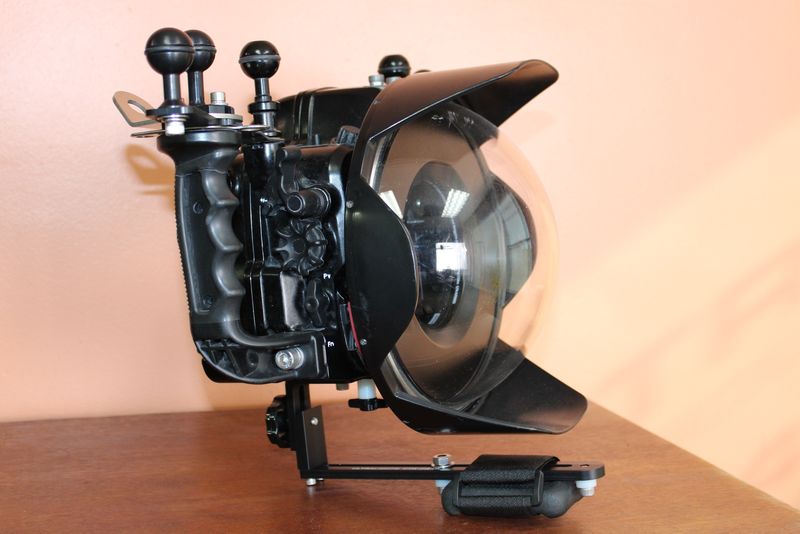
The Ultralight CTK-DWTK Camera Dome Weight Trim Kit is designed to give underwater photographers perfect balance and stability when using dome port housings that tend to float upward. This lift can cause arm and hand fatigue and make it difficult to line up the perfect shot.
The fully adjustable trim system can be positioned both horizontally and vertically and attaches securely to the housing with a plate that won’t damage the underside mounting pad. When weights (not included) are placed correctly, it delivers precise weight distribution to reduce front-heavy rigs, improve trim, and enhance control during dives.
Our first field tester for the CTK-DWTK was Mark B. Hatter. Since then, we’ve had additional photographers test it on a variety of camera rigs, and the response has been overwhelmingly positive. Every tester came back with the same impression: the CTK-DWTK was a true game changer for stability, handling, and overall usability in the water
Below is Mark's report on the Ultralight dome trim kit.
The CTK-DWTK Camera Dome Trim Weight Kit has added a new dimension of subject opportunities back into my shooting arsenal. The next time the boat is briefing us on schooling hammerheads in Cocos or spawning Bumphead parrotfish in Palau, I won’t be using hope as a strategy to shoot skittish subjects with my fisheye kit; I’ll be shooting a 16-35mm lens behind my super dome, horizontally balanced with my CTK-DWTK Camera Dome Trim Weight Kit.
If you’re a full-frame sensor shooter and are like me, I suspect that most of your shooting is either with an ultra-wide-angle fisheye lens behind a dome port or a narrow field of view telephoto macro lens behind a small, flat port. From a subject and convenience point of view, it seems that most of my subjects fall into one of these two categories.
However, my lack of interest in shooting an intermediate lens, like the venerable 16-35mm zoom, is more sinister than simply a matter of choice. My no-love, mostly-hate relationship with this lens stems from how it behaves when rigged behind a super dome port underwater.
Let me explain: Fisheye lenses are physically short and do not require much port extension when deployed. And many shooters use the so-called “mini-domes” with their fisheye lenses because it is easier to balance the camera kit for underwater use than with a super dome.
However, for overall corner-to-corner sharpness, the 9-inch super dome is superior to a mini-dome, but at a minor cost: a slightly nose-up buoyancy attitude due to the extra volume behind the glass. When shooting the super dome with my fisheye lens, it’s something I’ve learned to live with.
But simply employing either the fisheye or macro kit arrangement hamstrings my ability to effectively shoot a wider range of subjects that fall between the 180-degree field of view or the one-to-one shooting realm. Think sharks, whales, mantas, or any subject that is too skittish to allow close approach, large or small. These subjects, which fall into the “rectilinear wide angle” category, are often best tackled with a 16-35mm range lens with best performance, again, coming from behind a super dome.
But the issue which makes the super dome a bit of a pain in front of a fisheye lens is amplified significantly when shooting the 16-35mm lens, which requires a longer port extension, typically 70mm in length. It’s the longer port extension that amplifies the nose-up buoyancy aggravation and has driven me to mostly shelve my 16-35mm kit for underwater shooting.
Indeed, my attitude toward not using my 16-35mm kit is so strong that I’ve literally only employed it for surface shooting whales for the last two years. On the surface, the nose-up buoyancy is a benefit, as the floating rig is at no risk of sinking or causing fatigue during long swims.
However, for full-on underwater use, my near-neutral-buoyant, vertically oriented rig drives me crazy, to the point where I hope skittish subjects, like a shark or a manta, will come close enough for me to grab with my fisheye kit. This is not the most efficient or productive way to shoot.
When I visited the Ultralight Control Systems (ULCS) DEMA booth two years ago, I was discussing my grievance with the owner, Ken Kollwitz. “There needs to be some commercial method available to shooters of cantilevering a counterweight at the end of the super dome to offset the nose-up attitude of the camera kit,” I complained. “Even if near-neutral buoyant, my rig is hard to shoot with a single hand and fatiguing over the course of the dive. I just won’t use it while diving anymore.”
Happily, this past November, when I visited Ken’s booth at DEMA, he had taken my concerns to the engineering drawing board. The result was a fully adjustable bracket assembly that bolts to the bottom of the camera housing with an arm that can be adjusted vertically and horizontally to fit virtually any camera/dome kit combination on the market, allowing the mounting of a weight at the end of the horizontal bracket. The weight can either be permanently or temporarily mounted, depending on the needs of the user. Travel weight-conscious shooters will appreciate the velcro strap provided in the kit to mount the lead, which is always provided to divers at destinations.
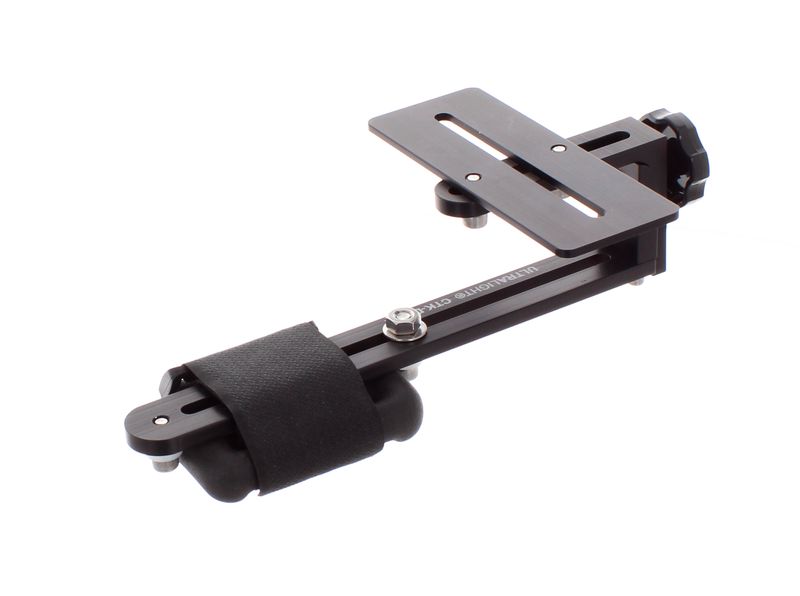
I was hot to get my hands on one and wanted to buy the only unit he had to display at his booth. But I had a secondary issue: the bolt hole was US standard in his demo bracket, and I needed a slightly larger bolt hole to allow mounting on my Seacam housing. Ken generously offered to set me up after the show.
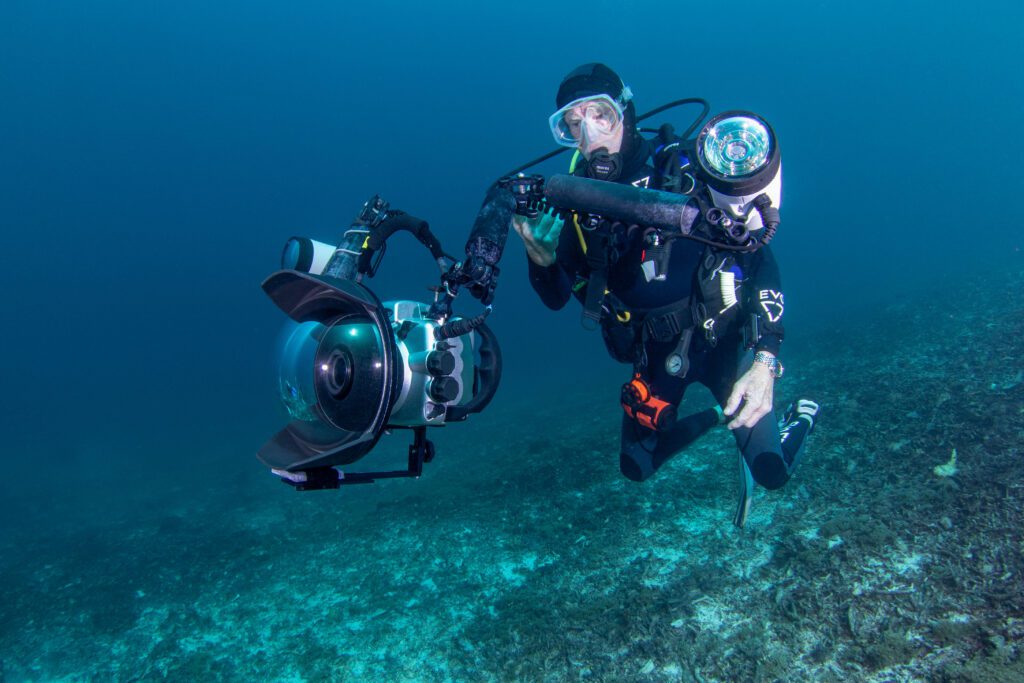
About a week later, I received the CTK-DWTK Camera Dome Trim Weight Kit for Underwater Camera Housings in the mail from ULCS with the larger hole bracket and all manner of stainless steel machine screws to put my bracket to a practical test. Ultimately, I established that one kilo of lead fastened to the end of the bracket, adjusted to sit under the sunshade, was just about perfect in the pool test I conducted in my backyard.
The cantilevered weight held the camera kit near horizontal underwater, a dramatic improvement over the vertical attitude my kit reverts to sans the weight.
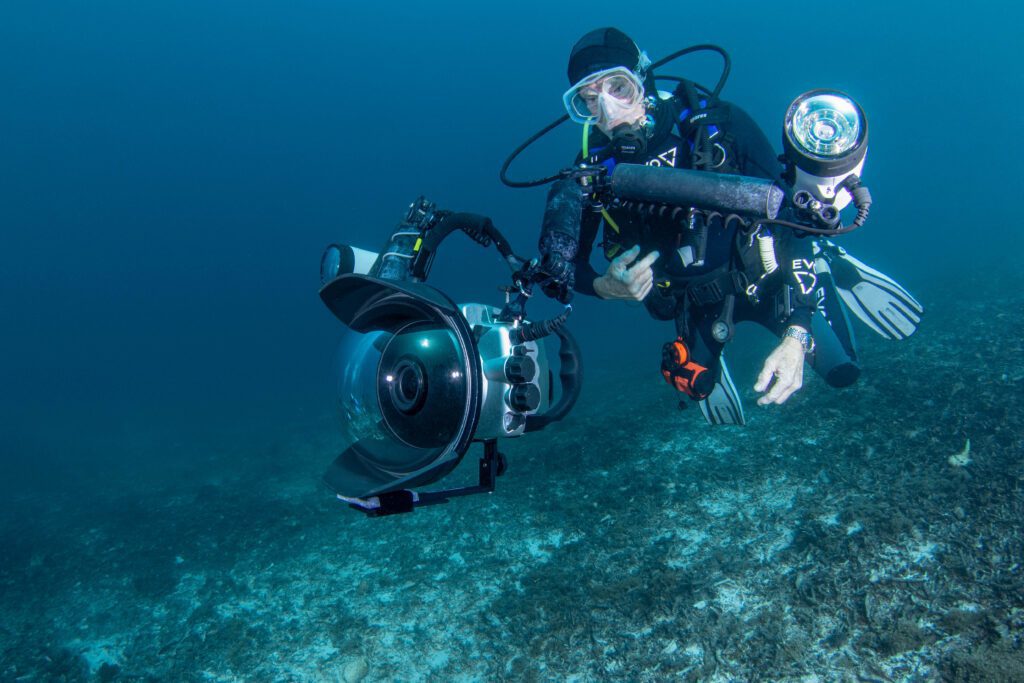
It was time to put the bracket to the acid test; a trip to Komodo this past March, where swirling currents and all manner of intermediate subjects would demand the use of my formerly shunned 16-35mm outfit in a balanced, horizontal orientation.
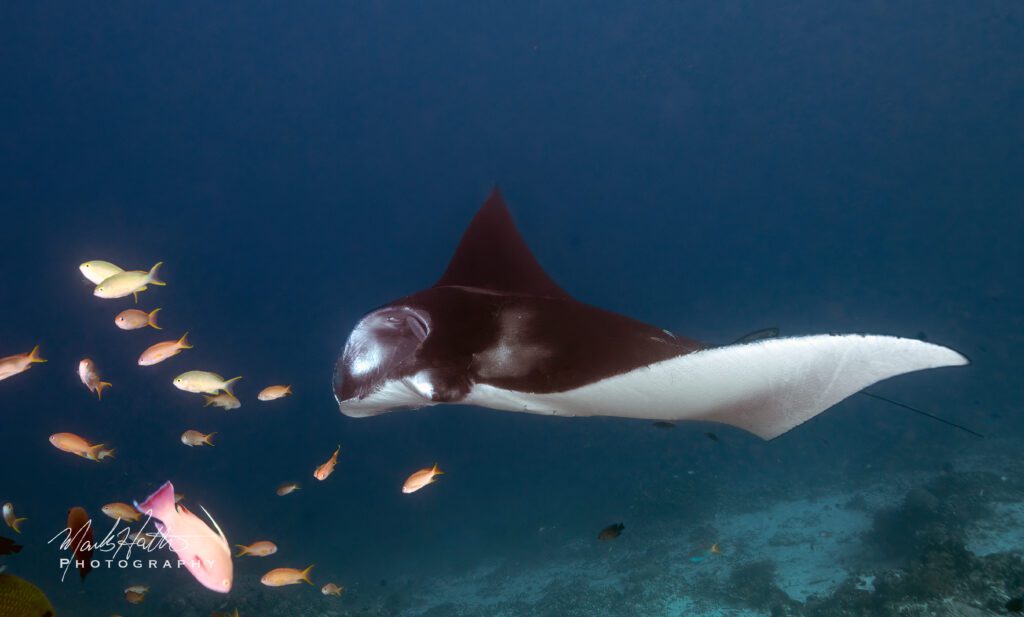
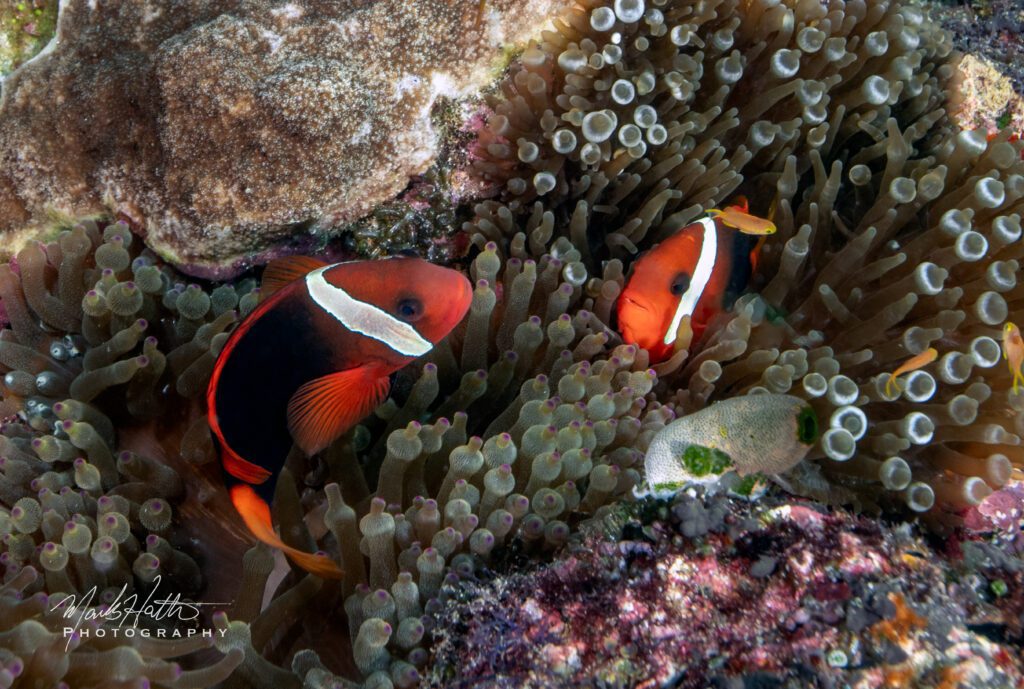
The results were liberating! The cantilevered one-kilo lead weight held my kit horizontally in the saltwater, and the slightly negative buoyancy enabled easy one-hand shooting. Finally, I was able to maximize the virtues of the 16-35mm kit, shooting everything from manta rays to close focus subjects like anemonefish and a pair of Halimeda ghost pipefish, at 35mm, one-handed!
I think the CTK-DWTK Camera Dome Trim Weight Kit is a game-changer. But don’t take my word on it, check out the video and images provided courtesy of my dive buddy Kevin Kurtz during our Komodo adventure.
Mark travels all over the world and is a trip leader for Bluewater Photo. Read more about Mark HERE.